



Daily worship, mantras and sacred practice
Puja Vidhi: Simple Daily Worship at Home
Follow a clear, respectful home puja method with practical steps, essential samagri, mantras and trusted guides for important Hindu observances.
A clear place to begin
What Is Puja Vidhi?
Puja Vidhi is the method of worship used to honour a deity with devotion, cleanliness, offerings, mantras and prayer. A simple daily puja can be performed at home without complicated rituals. The intention is to create a calm sacred space, express gratitude and bring consistency to spiritual practice.
- Suitable for beginners
- Can be performed without a priest
- Works for morning or evening worship
- Adaptable to your chosen deity
Daily method
Simple Puja Vidhi at Home: Step by Step
Use this short sequence for everyday worship. Festival and deity-specific pujas may include additional rituals.
Prepare yourself
Bathe or wash your hands and face, wear clean clothes and settle the mind.
Clean the altar
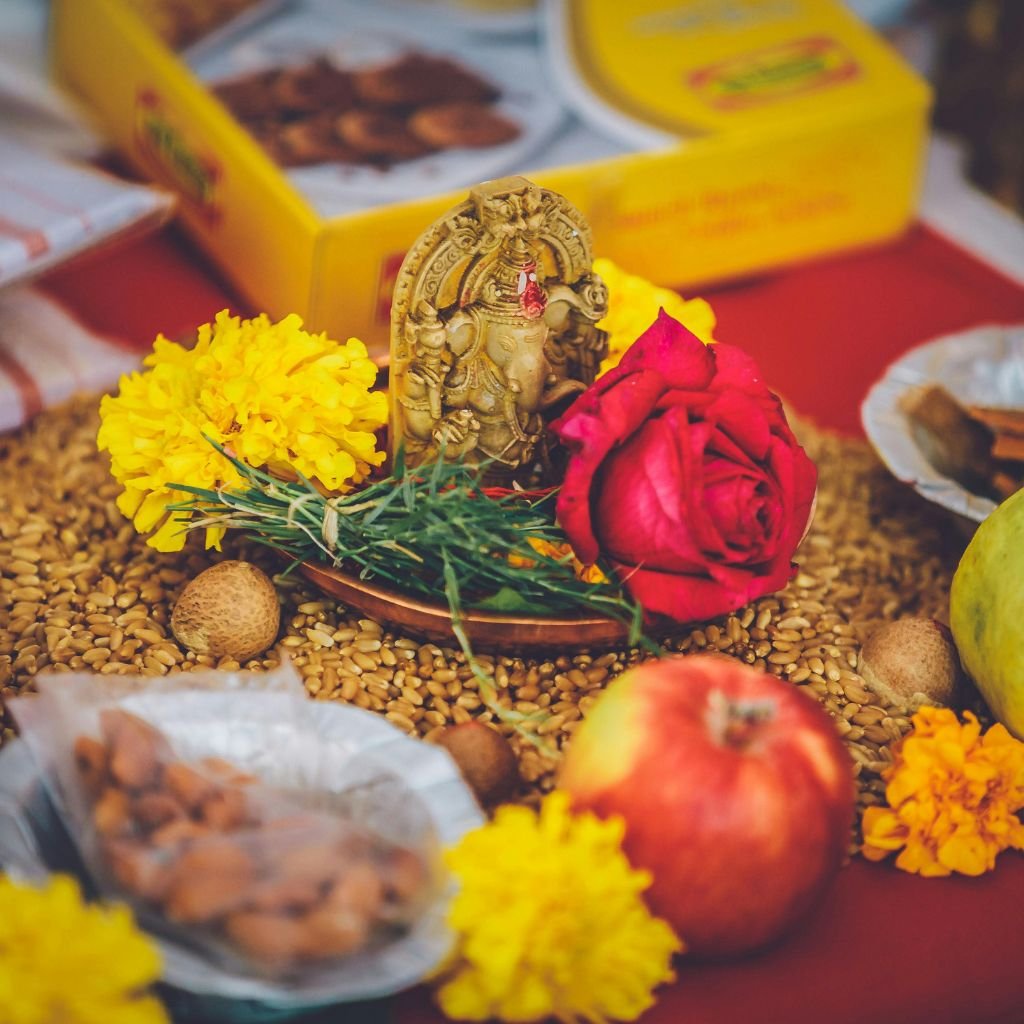
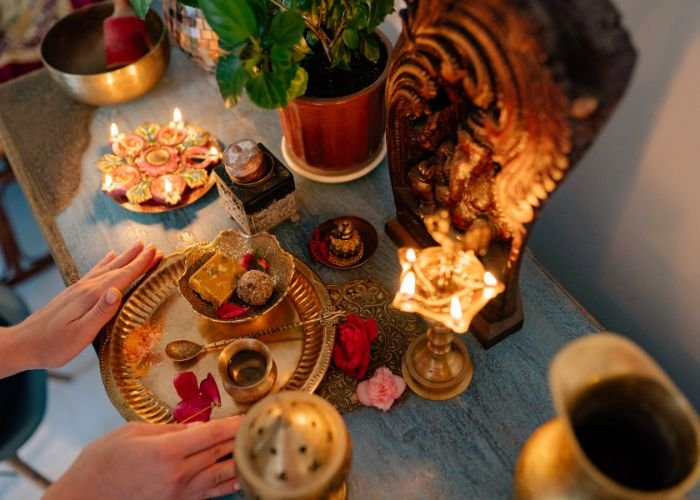
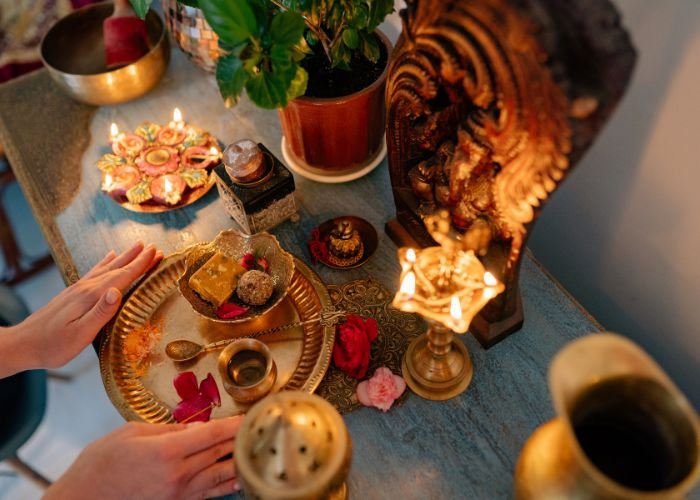
Arrange the deity image or murti, water, flowers, diya and offerings neatly.
Take sankalp
Join your hands and state the intention of your worship with sincerity.
Light diya and incense
Light the lamp safely and offer incense to begin the sacred atmosphere.
Make offerings
Offer water, flowers, akshat, fruit or a simple sattvic preparation.
Chant and pray
Recite your deity mantra, stotra, chalisa or repeat the divine name.
Perform aarti
Offer the lamp in gentle circles, bow and sit quietly for a few moments.
Share prasad
Conclude with gratitude and respectfully distribute the offered prasad.
Best time
Morning after bathing is ideal. Evening Sandhya is also suitable for daily worship.
How often
Daily practice is encouraged, but one focused puja is more meaningful than hurried repetition.
Best direction
The devotee may face east or north. Keep the altar clean, stable and respectfully arranged.
Prepare before you begin
Basic Puja Samagri
You do not need every item for a simple daily puja. Begin with what is available and appropriate for your tradition.
View the complete essentials kit- Diya and cotton wick
- Clean water or Gangajal
- Flowers or leaves
- Incense and camphor
- Roli, chandan and akshat
- Fruit, sweets or prasad
- Bell and aarti thali
- Deity image or murti
Choose your practice
Popular Puja and Vrat Guides
Move from the daily method to a complete guide for the deity, vrat or festival you are observing.
Daily Puja at Home
A practical sequence for a calm and consistent home practice.
Follow the stepsLord ShivaRudrabhishek Puja Vidhi
Abhishek method, offerings, mantras and guidance for Shiva worship.
Read the guideMonday vrat16 Somvar Vrat Vidhi
Complete home puja, katha, samagri and udyapan guidance.
Read the guideFestival pujaDiwali Lakshmi Puja
Lakshmi-Ganesha worship, samagri, mantras and home setup.
Read the guideDhantrayodashiDhanteras Puja Vidhi
Worship guidance for Lakshmi, Dhanvantari and Lord Kubera.
Read the guidePlan ahead2026 Puja and Vrat Calendar
Find upcoming observances and open the relevant guide before the date.
Open the calendarRelevant from Divine Store
Prepare With the Right Puja Resources
These recommendations directly support the daily method and the most common home puja needs.

Aarti Thali and Puja Thali Set
A dedicated thali for diya, incense, kumkum and daily aarti.
View aarti thali
Watch and follow
Puja Vidhi Video Guides
Learn visually with evergreen Sanatana Journey videos covering Satyanarayan Puja, Somvar Vrat, Mangla Gauri worship and Janmashtami Vrat Katha.
Visit the YouTube channelCommon questions
Puja Vidhi FAQs
What is the meaning of Puja?
Puja means worship: an expression of devotion and gratitude through prayer, offerings, mantra and respectful ritual.
Can Puja be done without a priest?
Yes. A simple daily Puja Vidhi can be performed at home by anyone with sincerity, cleanliness and respect. Complex ceremonies may benefit from guidance by a knowledgeable priest.
What items are needed for Puja?
For daily worship, begin with a diya, water, flowers, incense, roli or chandan, akshat and a simple offering such as fruit or sweets.
How long should a daily Puja take?
A focused daily practice may take 10 to 20 minutes. Consistency and devotion matter more than duration.
Which direction should I face during Puja?
Facing east or north is commonly preferred. The altar should be clean, stable and arranged so the deity is treated respectfully.
Where can I find complete Puja Vidhi guides?
Use the linked Sanatana Journey guides for deity, festival and vrat-specific instructions, or choose an available digital katha guide from Divine Store.
Begin with a simple, sincere daily Puja
Keep this guide close and deepen the practice one step at a time.