
Hindu Wedding Traditions | भारतीय शादी की परंपराएं
भारतीय विवाह एक पवित्र और हर्षोल्लास से भरा अवसर होता है, जो परिवारों को प्राचीन और अर्थपूर्ण रस्मों के माध्यम से जोड़ता है। ये रस्में प्रेम, समर्पण और जीवन के नए सफर की शुरुआत का उत्सव मनाने के लिए बनाई गई हैं। नीचे वे प्रमुख रस्में दी गई हैं जो एक भारतीय विवाह का मूल स्वरूप बनाती हैं।
Hindu wedding traditions are among the most vibrant, meaningful, and culturally rich ceremonies in the world. A Hindu wedding is not just a union of two individuals—it is a sacred bond of two families, two souls, and two destinies. Rooted deeply in Vedic culture, Hindu weddings, also known as Vivaha Sanskar, celebrate love, spirituality, family values, and the harmony between dharma and companionship.
Indian marriage rituals reflect centuries of customs, symbolism, and spiritual practices. From pre wedding rituals to the main Hindu wedding ceremony, and finally the post marriage traditions, every step holds divine significance. This detailed guide explores Hindu wedding traditions, Hindu marriage rituals, regional differences, and step-by-step rasams followed across India.
Some Important Hindu Wedding Traditions
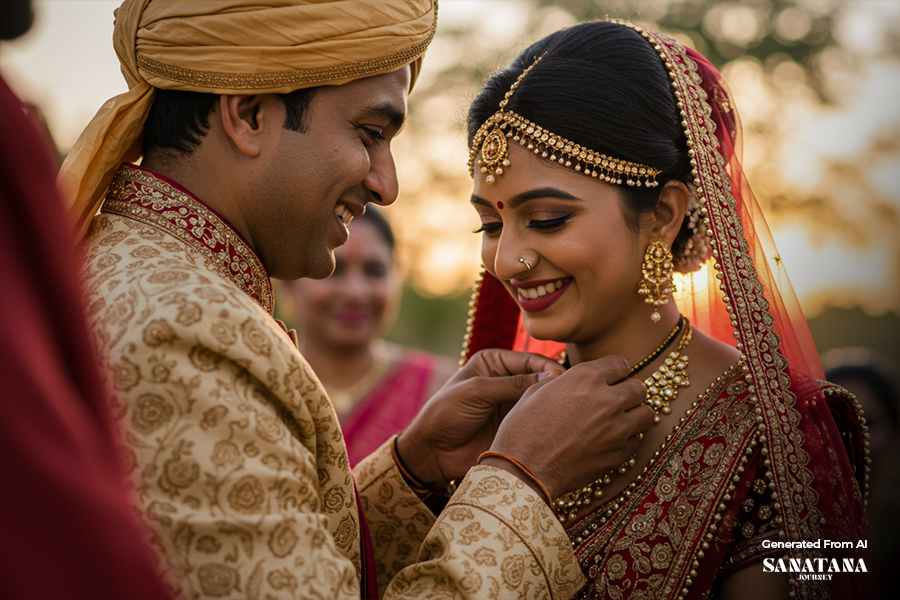
मांगल्य धारणम् विवाह का एक महत्वपूर्ण अनुष्ठान है, जिसमें दूल्हा दुल्हन के गले में मंगलसूत्र बांधता है। यह रस्म उनके पवित्र वैवाहिक बंधन और जीवनभर की सुरक्षा का प्रतीक होती है। मंगलसूत्र न केवल प्रेम और समर्पण को दर्शाता है, बल्कि यह दांपत्य जीवन की शुभता और सौभाग्य का भी प्रतीक माना जाता है।
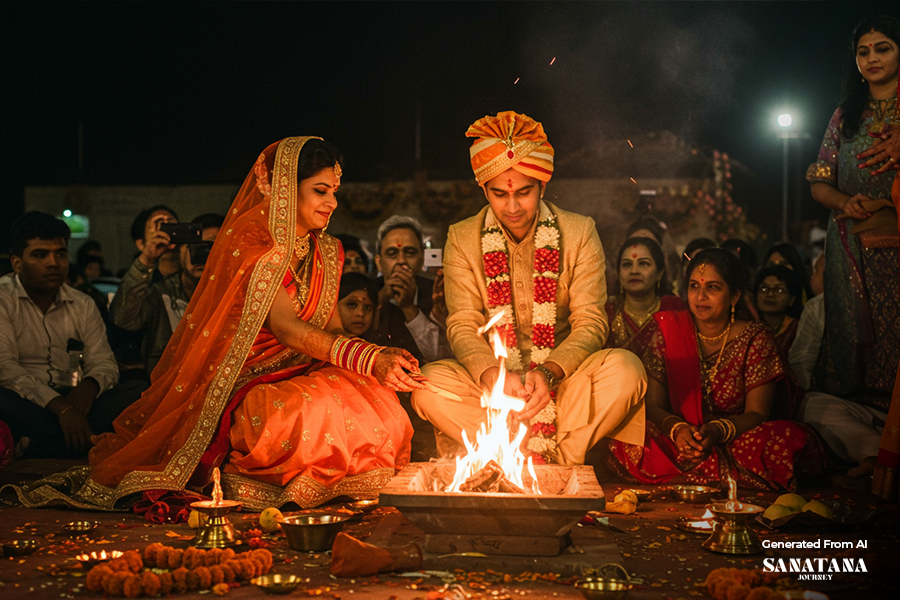
सप्तपदी विवाह का सबसे महत्वपूर्ण अनुष्ठान है, जिसमें दूल्हा और दुल्हन पवित्र अग्नि के चारों ओर सात कदम चलते हैं। प्रत्येक कदम उनके वैवाहिक जीवन की समृद्धि, सुख और सामंजस्य के लिए एक वचन को दर्शाता है। यह रस्म पति-पत्नी के बीच प्रेम, विश्वास और जीवनभर साथ निभाने की प्रतिज्ञा को मजबूत करती है। अग्नि इन पवित्र वचनों का साक्षी मानी जाती है, जिससे यह अनुष्ठान और भी पवित्र हो जाता है।
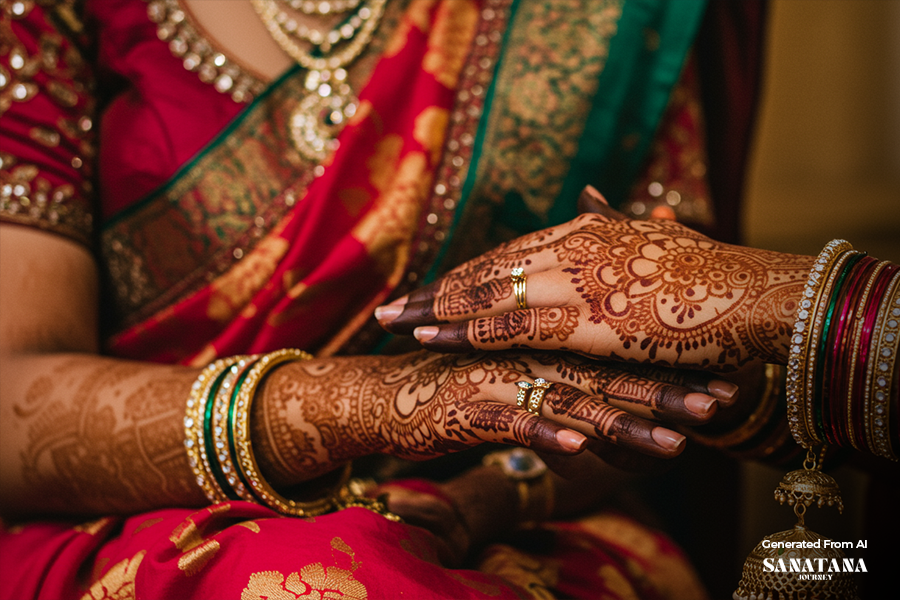
मेहंदी रस्म भारतीय विवाह समारोह का एक महत्वपूर्ण हिस्सा है, जिसमें दुल्हन के हाथों और पैरों पर सुंदर मेंहदी के डिजाइन लगाए जाते हैं। यह रस्म सौभाग्य, प्रेम और शुभता का प्रतीक मानी जाती है। मेहंदी का रंग जितना गहरा होता है, यह माना जाता है कि दूल्हा और ससुराल वालों का उतना ही अधिक प्रेम और स्नेह प्राप्त होगा। इस अवसर को नृत्य, संगीत और उत्सव के साथ मनाया जाता है, जिससे यह शादी की सबसे आनंदमय रस्मों में से एक बन जाती है।
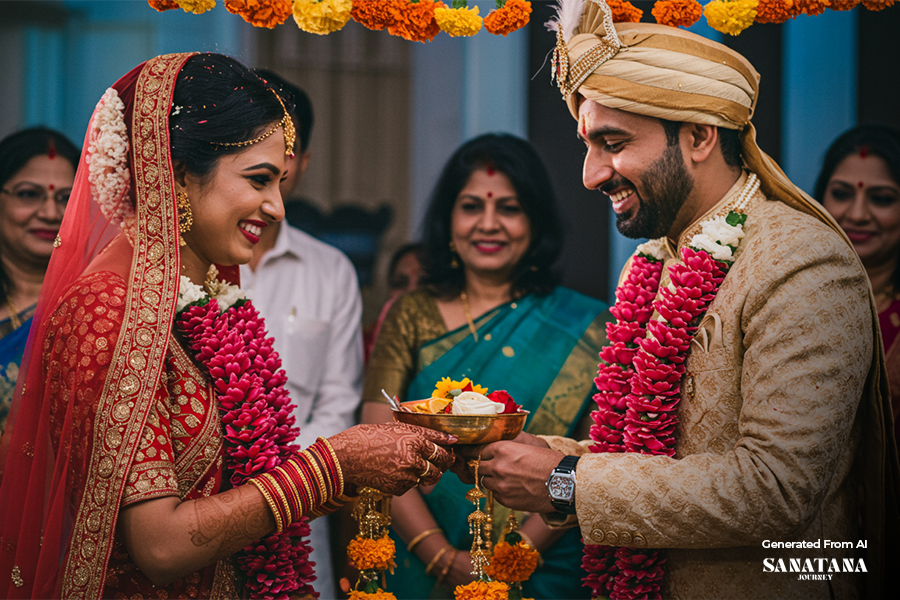
वरमाला एक आनंदमय रस्म है, जिसमें दूल्हा और दुल्हन एक-दूसरे को फूलों की माला पहनाते हैं। यह प्रेम और स्वीकृति का प्रतीक है, जो उनके वैवाहिक जीवन की शुरुआत को दर्शाता है। यह रस्म पारस्परिक सम्मान और एक-दूसरे के प्रति समर्पण को दर्शाती है, जिससे वे अपने नए जीवन के सफर को एक साथ शुरू करने के लिए तैयार होते हैं। वरमाला विवाह के बंधन और एकता का प्रतीक होती है, जो दंपति के बीच अटूट संबंध का शुभारंभ करती है।
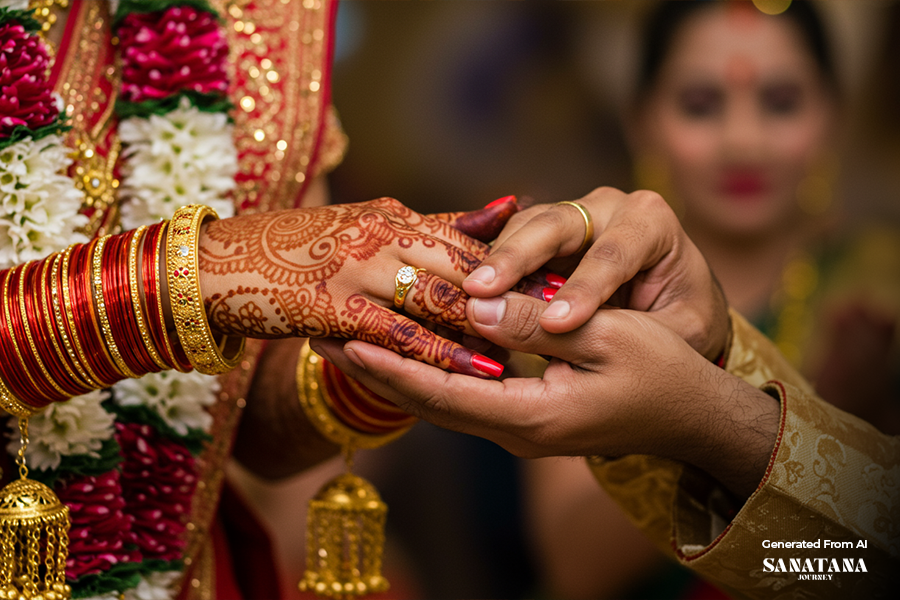
वाग्दानम् या सगाई समारोह विवाह के लिए दूल्हा-दुल्हन और उनके परिवारों के बीच एक औपचारिक वचनबद्धता होती है। यह रस्म दंपति के एक-दूसरे के प्रति समर्पण और विवाह जैसे पवित्र बंधन में बंधने की स्वीकृति को दर्शाती है। इस अवसर पर आमतौर पर अंगूठियों का आदान-प्रदान या कोई प्रतीकात्मकgesture किया जाता है। साथ ही, परिवार के बड़ों का आशीर्वाद प्राप्त कर इस नए रिश्ते को शुभ और मंगलमय बनाया जाता है।
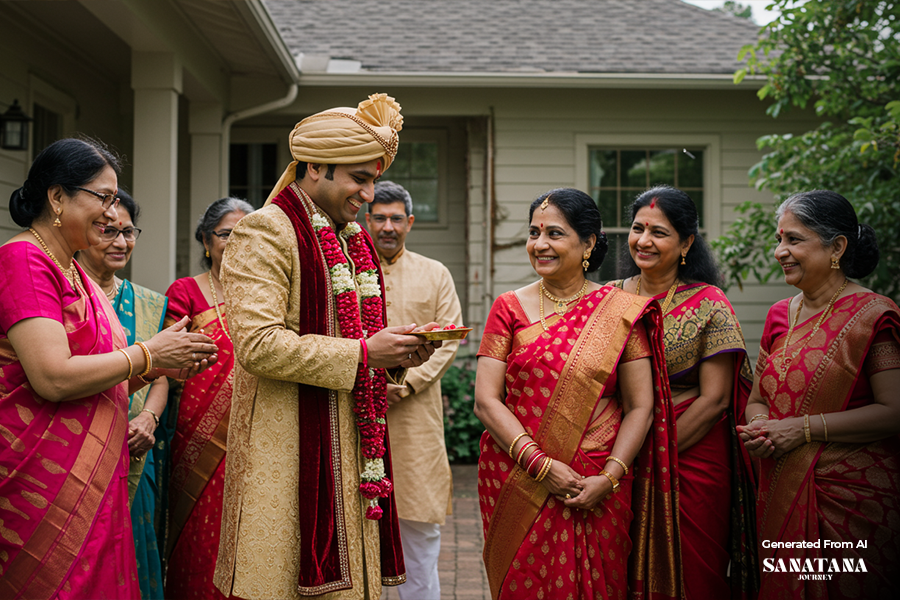
मधुपर्क रस्म के दौरान दुल्हन का परिवार दूल्हे का पारंपरिक रूप से स्वागत करता है। यह अतिथि सत्कार और सम्मान का प्रतीक होता है। इस रस्म में दूल्हे के चरण धोए जाते हैं, जो आदर और श्रद्धा को दर्शाता है। साथ ही, उसे दही, शहद और घी अर्पित किया जाता है, जो शुभता, मिठास और समृद्धि का प्रतीक माना जाता है।
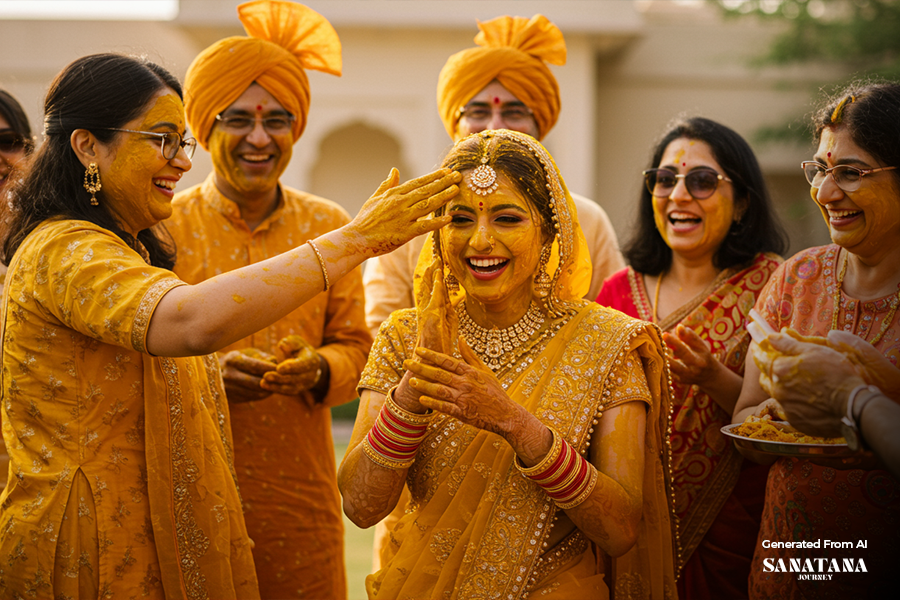
हल्दी समारोह एक पारंपरिक पूर्व-विवाह अनुष्ठान है, जिसमें दूल्हा और दुल्हन के शरीर पर हल्दी का लेप लगाया जाता है। यह रस्म शुद्धिकरण, बुरी नजर से बचाव और शादी के दिन स्वाभाविक सुंदरता को निखारने का प्रतीक मानी जाती है। इस अवसर पर परिवार के सदस्य हल्दी लगाकर अपने आशीर्वाद देते हैं, और यह खुशी, गीत-संगीत और उत्सव के साथ मनाया जाता है।
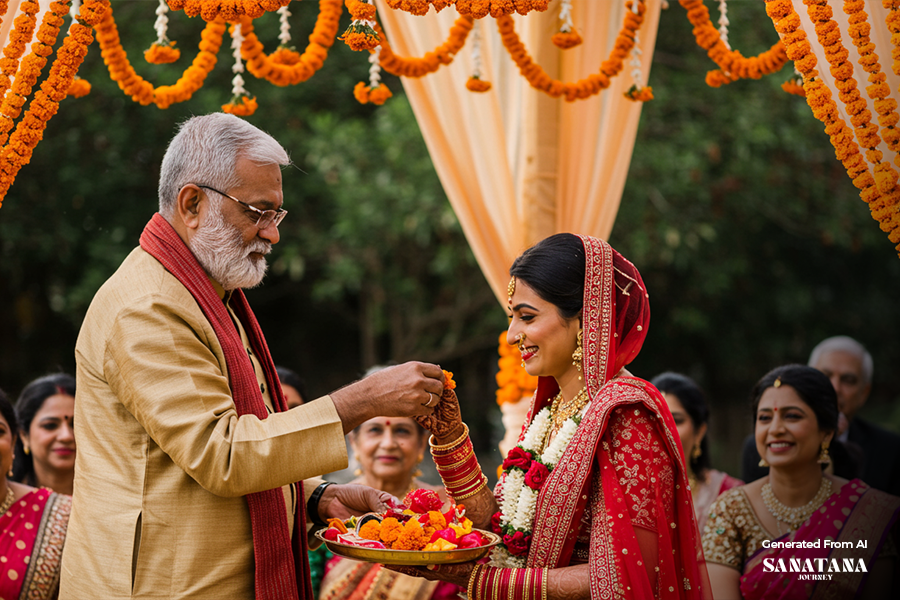
कन्यादान भारतीय विवाह का एक पवित्र और भावनात्मक अनुष्ठान है, जिसमें दुल्हन के पिता अपनी पुत्री का हाथ दूल्हे के हाथ में सौंपते हैं, उसे उसके जीवन की जिम्मेदारी सौंपते हुए। यह रस्म माता-पिता के निःस्वार्थ प्रेम और त्याग का प्रतीक होती है, जहां वे अपनी संतान को एक नए जीवन के लिए आशीर्वाद देते हैं। इस दौरान दूल्हा वचन देता है कि वह जीवनभर दुल्हन की देखभाल करेगा, उसे प्रेम और सम्मान देगा। यह क्षण परिवार के लिए भावनाओं से भरा होता है।
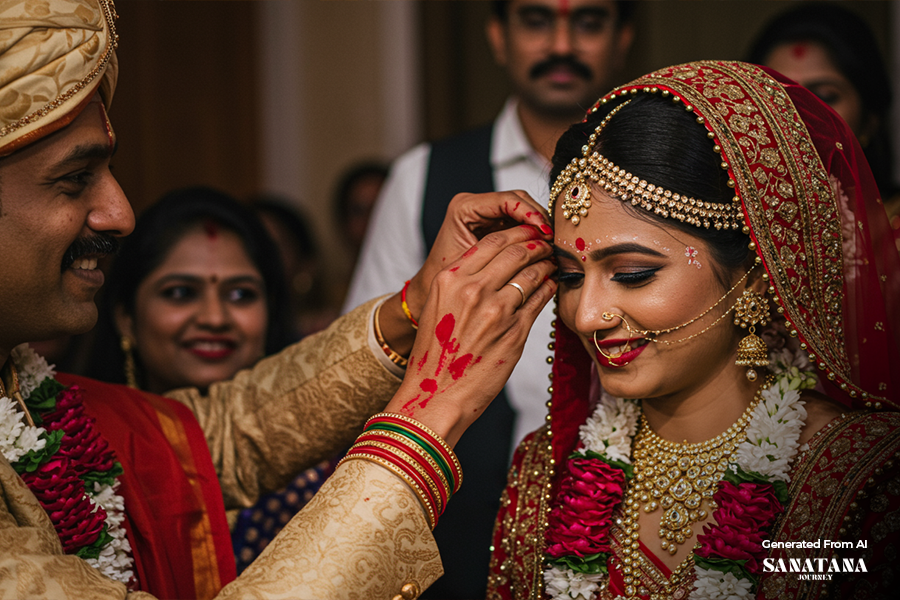
सिंदूर दान भारतीय विवाह की एक महत्वपूर्ण रस्म है, जिसमें दूल्हा दुल्हन की मांग में सिंदूर भरता है। यह रस्म दुल्हन के विवाहित होने का प्रतीक मानी जाती है और आजीवन साथ निभाने की प्रतिबद्धता को दर्शाती है। विवाह के दौरान दूल्हा सिंदूर भरकर अपने प्रेम और समर्पण की शपथ लेता है, और दुल्हन इसे अपने वैवाहिक जीवन के शुभ संकेत के रूप में अपनाती है।

History of Hindu Wedding Traditions
The history of Hindu wedding traditions dates back thousands of years to Vedic times. Hindu marriage is considered a sacred sacrament (Sanskar) rather than a contract. Ancient scriptures like the Rig Veda and Manusmriti describe marriage rituals in Hinduism as a spiritual journey where the couple promises to uphold dharma, mutual respect, and lifelong companionship.
Traditional Indian wedding rituals evolved over time, adapting regional customs, languages, and community values, but the essence of sacred union and divine blessings remains unchanged.
Pre Hindu Wedding Traditions
Pre-wedding rituals mark the beginning of celebration, bonding, and spiritual preparation. These customs vary by region but share common symbolism—purification, commitment, and family unity.
Lagna Patrika
Lagna Patrika is the formal written announcement of the wedding date and mahurat. It is often signed by both families, marking the official beginning of Hindu wedding traditions.
Wagdaan
A traditional engagement ceremony symbolizing commitment between the bride’s and groom’s families. It often includes exchanging gifts and blessings.
Roka
Roka is a popular North Indian pre wedding ritual where families officially confirm the marriage alliance and bless the couple.
Barni Bandh Hwana
Also known as Vighnaharta Puja, this ritual seeks divine blessings to ensure a smooth Hindu wedding ceremony without obstacles.
Mama Bhaat / Mayara Ceremony
In this emotional ritual, the bride’s maternal uncle (Mama) brings gifts, clothes, and sweets as a blessing for the upcoming wedding.
Sangeet
A celebration filled with dance, music, and joy. The Sangeet ceremony strengthens family bonds and marks the lively spirit of Indian wedding ceremonies.
Mehndi
The bride’s hands and feet are adorned with intricate henna designs. Mehndi symbolizes beauty, love, and auspiciousness.
Tilak
A traditional ceremony at the groom’s home where the bride’s family applies tilak on his forehead, symbolizing acceptance and respect.
Haldi
One of the most famous Indian wedding rituals, Haldi involves applying turmeric paste to the bride and groom for purification and glow.
Hindu Wedding Traditions Ceremony
The main Hindu wedding ceremony is a sacred and elaborate sequence of rituals. Below are the major Hindu wedding rituals step by step:
Baarat
The groom arrives in a grand procession with music, dance, and celebration.
Pokwanu (Welcoming the Groom)
The bride’s family warmly welcomes the groom and showers him with blessings.
Ganesh Puja
Lord Ganesha is worshipped first to remove obstacles and bless the ceremony.
Varmala
The bride and groom exchange garlands, symbolizing acceptance and love.
Kanyadaan
One of the most emotional Hindu marriage rituals, Kanyadaan is the giving away of the bride by her parents to the groom.
Saptapadi (Seven Steps)
The couple takes seven sacred steps around the holy fire, each step representing a vow of companionship, prosperity, and dharma. This is the heart of Hindu wedding rituals.
Post Hindu Wedding Traditions
After the wedding ceremony, several Hindu marriage traditions celebrate the new beginnings.
Vidaai
The bride bids farewell to her family—an emotional and symbolic departure.
Aashirvaad
The newlywed couple receives blessings from elders.
Dwar Rokai
The groom’s sister playfully blocks the couple at the entrance for gifts.
Griha Pravesh
The bride enters her new home, symbolizing prosperity and harmony.
Mooh Dikhai
The bride is introduced to the groom’s extended family and receives blessings and gifts.
Pag Phera
The bride returns to her maternal home for blessings and is brought back by the groom.
Frequently Asked Questions
What are Hindu wedding rituals?
They are sacred ceremonies including Kanyadaan, Varmala, Saptapadi, and many regional customs.
What is pre pre-wedding ceremony?
Events like Roka, Mehndi, Sangeet, and Haldi held before the main Hindu marriage event.
How many steps are there in a Hindu wedding?
Each community differs, but core steps include Ganesh Puja, Varmala, Kanyadaan, and Saptapadi.
Are all Hindu weddings the same?
No—Indian wedding traditions vary by state, culture, community, and family preferences.