

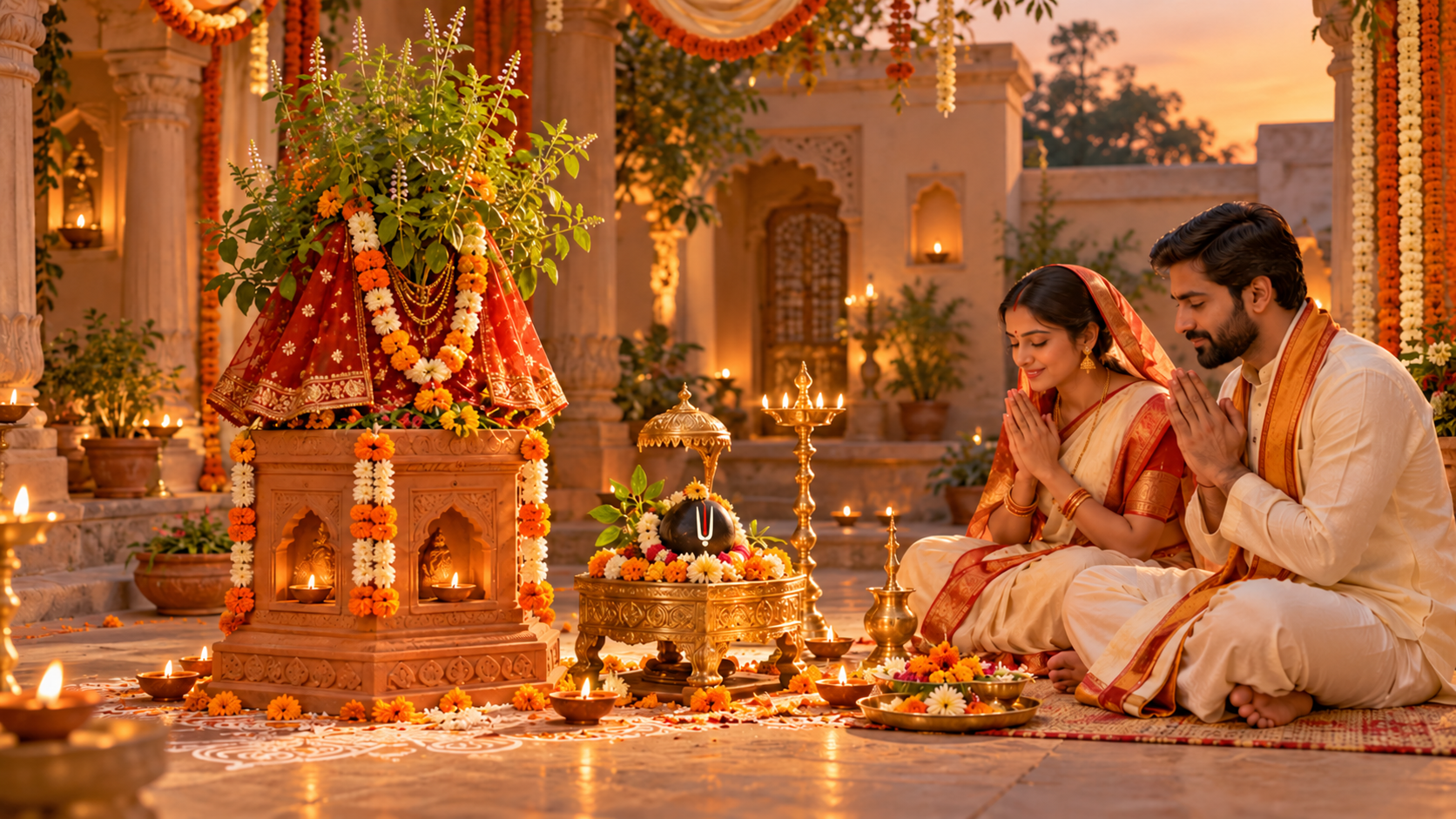
Tulsi Vivah 2026 will be celebrated on Saturday, 21 November 2026. The festival marks the ceremonial marriage of Goddess Tulsi, worshipped as Vrinda, with Lord Vishnu in the form of Shaligram or with Lord Krishna. It follows Dev Uthani Ekadashi and symbolically opens the Hindu wedding season after Chaturmas.
- Date: Saturday, 21 November 2026
- Dwadashi Tithi begins: 6:31 AM on 21 November
- Dwadashi Tithi ends: 4:56 AM on 22 November
- Recommended worship period: Godhuli Vela or evening, according to local tradition
City-specific timings may vary. Check your local Panchang before performing Sankalp.
What is Tulsi Vivah?
Tulsi Vivah is a devotional wedding ceremony in which the sacred Tulsi plant is decorated as a bride and married to Shaligram, Lord Vishnu or Lord Krishna. The observance joins the domestic sacred space with the symbolism of a Hindu wedding: invitation, mandap, haldi, chunari, mangalsutra, offerings, mantras, aarti and prasad.
The festival is observed during Kartik Shukla Paksha. Traditions differ by region, and some families perform it between Dev Uthani Ekadashi and Kartik Purnima. For 2026, the widely followed Tulsi Vivah observance is on 21 November.
Tulsi Vivah 2026 Date and Tithi
In New Delhi, Dwadashi Tithi begins at 6:31 AM on 21 November 2026 and ends at 4:56 AM on 22 November. The ceremony is commonly performed in the evening or during Godhuli Vela. Families should follow their sampradaya and local Panchang because regional customs may select a different moment within the auspicious Kartik period.
Tulsi Vivah Puja Samagri
- A healthy Tulsi plant and clean Tulsi Vrindavan or pot
- Shaligram, Vishnu or Krishna murti
- Red or yellow chunari and small bridal ornaments for Tulsi
- Cloth, janeu and adornments for Shaligram or Vishnu
- Roli, turmeric, kumkum, akshat, sandalwood and flowers
- Diya, ghee or oil, incense and camphor
- Sugarcane, amla, coconut, fruits and sweets
- Kalash, water, Panchamrit and naivedya
- Thread for tying the symbolic wedding knot
Devotees preparing the ceremony can see the Dev Uthani Ekadashi and Tulsi Vivah essentials selected for home worship.
Simple Tulsi Vivah Puja Vidhi at Home
- Clean and decorate: Wash the worship area, decorate the Tulsi Vrindavan with rangoli and flowers, and prepare a small mandap.
- Take Sankalp: Bathe, wear clean clothes and resolve to perform the ceremony with devotion.
- Invoke Ganesha: Begin with Ganesh Puja so the ceremony proceeds without obstacles.
- Adorn the divine couple: Dress Tulsi with a chunari and ornaments. Bathe Shaligram with Panchamrit and dress or decorate the Vishnu form.
- Perform worship: Offer roli, akshat, sandalwood, flowers, incense, diya, fruits and sweets to Tulsi and Vishnu.
- Join the couple: Tie the symbolic wedding knot between Tulsi and Shaligram. Recite Vishnu mantras and perform the customary Kanyadaan Sankalp where followed.
- Take pheras: Carry Shaligram around the Tulsi plant or circumambulate the divine couple according to family tradition.
- Aarti and prasad: Perform Tulsi and Vishnu Aarti, offer naivedya and distribute prasad.
Tulsi Vivah Katha: Vrinda and Jalandhar
The story centres on Vrinda, an unwavering devotee of Lord Vishnu and the devoted wife of Jalandhar. Her spiritual purity made Jalandhar invincible. To restore cosmic balance, Vishnu intervened; after the truth was revealed, the grieving Vrinda cursed Him to become stone, associated with Shaligram. Through divine grace, Vrinda became the sacred Tulsi plant and was promised an eternal place in Vishnu worship.
Tulsi Vivah remembers the union of Tulsi and Shaligram and honours devotion that continues beyond physical form. Read the fuller account in Why Is Tulsi Worshipped? The Story of Vrinda.
Tulsi Vivah Mantras
ॐ तुलस्यै नमः
Om Tulasyai Namahॐ नमो भगवते वासुदेवाय
Om Namo Bhagavate Vasudevaya
Regional Tulsi Vivah Traditions
In Maharashtra, devotees may recite Mangalashtaka with an antarpat placed between the divine bride and groom. In Andhra Pradesh and Telangana, Tulsi Kalyanam may include an amla branch representing Lord Vishnu. In Braj and many Krishna temples, the ceremony is celebrated with bhajan, kirtan, baraat and a wedding tableau. These forms differ, but each honours Tulsi’s devotion and her inseparable relationship with Vishnu.
What to Offer and Distribute as Prasad
Sugarcane, amla, coconut, seasonal fruits, peanuts, sesame preparations and sweets are commonly offered. Prepare only sattvic food, and avoid plucking Tulsi leaves after sunset. If leaves are required for worship, collect them respectfully at an appropriate time according to tradition.
Tulsi Vivah FAQs
When is Tulsi Vivah in 2026?
Tulsi Vivah is on Saturday, 21 November 2026.
What are the Dwadashi timings for Tulsi Vivah 2026?
For New Delhi, Dwadashi begins at 6:31 AM on 21 November and ends at 4:56 AM on 22 November. Check local timings for your city.
Who is married during Tulsi Vivah?
Goddess Tulsi or Vrinda is ceremonially married to Shaligram, Lord Vishnu or Lord Krishna, depending on regional and family tradition.
Can Tulsi Vivah be performed at home?
Yes. Families can perform a simple ceremony with a clean altar, Tulsi plant, Vishnu or Shaligram, puja offerings, mantras, aarti and prasad.
Is fasting compulsory on Tulsi Vivah?
Some devotees fast, while others observe Dev Uthani Ekadashi vrat and perform Tulsi Vivah the following day. Follow family tradition without compromising health.
Continue your Kartik journey
Prepare with the Sampurna Ekadashi Guide eBook, and continue to our Kartik Purnima 2026 guide.