

Kanyadan Ceremony
The Kanyadan (कन्यादान) ceremony is one of the most sacred and emotionally significant rituals in a Hindu wedding. It symbolizes the moment when the bride’s parents give their daughter to the groom, entrusting him with the responsibility to love, protect, and honour her throughout life. In Sanskrit, “Kanya” means daughter and “Daan” means giving away, which together make Kanyadan meaning “the sacred giving of the daughter.” Deeply rooted in Hindu dharma, the Hindu Kanyadan ceremony reflects love, duty, blessings, and the passing of responsibility from one family to another. Despite its ancient origins, this ritual remains a heartfelt highlight across Indian weddings.
Hindu Kanyadan Ceremony
कन्यादान का परिचय
How Is Kanyadan Performed as a Ritual?
The kanyadaan ritual is performed with specific mantras and symbolic steps:
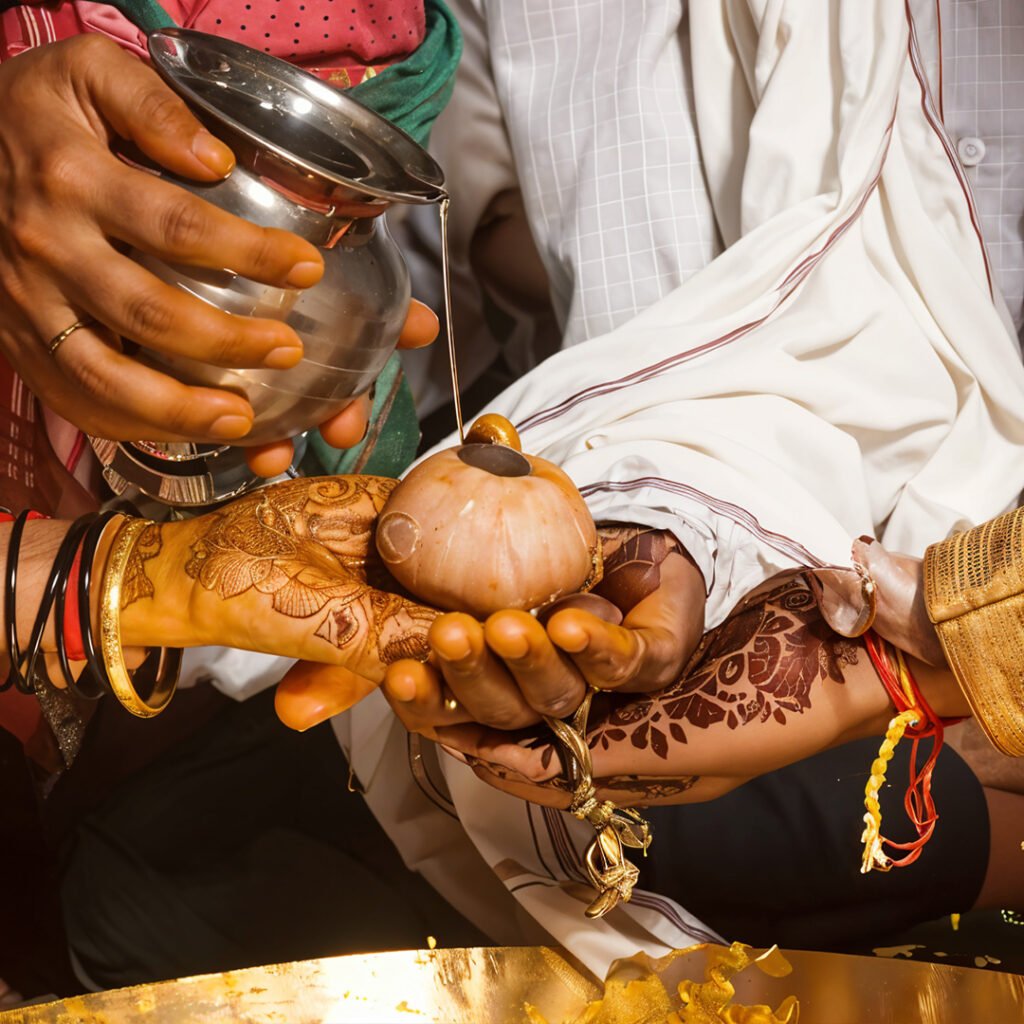
The bride is brought to the mandap by her maternal uncle or family member and Parents wash the groom’s feet, symbolizing respect and acceptance.
The bride’s hand is placed in the groom’s hand.
Sacred mantras are chanted and Holy water or ghee is poured into the couple’s palms as a symbol of purity.
The father says: “I offer my daughter to you. Protect her, respect her, and treat her with love.”
History Behind Kanyadan
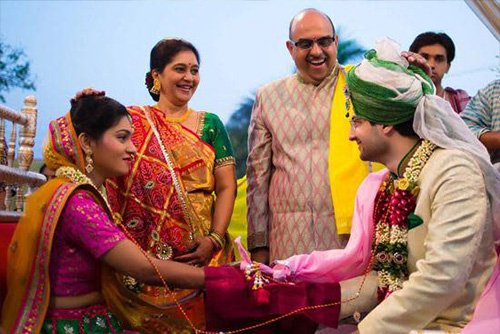
The origins of kanyadaan date back thousands of years. Ancient texts such as the Manusmriti, Gr̥hya Sutras, and Dharmashastras describe this ritual as an honourable duty of parents. A daughter was considered Goddess Lakshmi in the house. Giving her hand in marriage signified offering wealth, purity, and blessings to another family. It also symbolized the passing of protection from father to husband..
Mehndi Ceremony Process
Who Performs Kanyadan?
Traditionally, the bride’s biological parents perform the kanyadaan. But according to dharma texts and modern practices:
If the father is not present, the mother alone can perform kanyadan.
If parents are unavailable, grandparents, uncles, elder brothers, or guardians may perform the ritual.
In some cases, adoptive parents or caretakers perform the ceremony.
कन्यादान का महत्व
धार्मिक मान्यताओं के अनुसार, कन्यादान को सबसे बड़ा और सबसे शुभ दान माना गया है। यह रस्म केवल बेटी को विदा करने तक सीमित नहीं होती, बल्कि इसमें माता-पिता यह संकल्प लेते हैं कि वे अपनी बेटी को नए जीवन में हर प्रकार का आशीर्वाद और समर्थन देंगे। कन्यादान के समय विशेष मंत्रों का उच्चारण किया जाता है, जिनमें वर-वधू के सुखद वैवाहिक जीवन की कामना की जाती है। यह रस्म प्रेम, सम्मान, समर्पण और आशीर्वाद का प्रतीक है, जो विवाह के पवित्र बंधन को और भी मजबूत बनाता है।
Importance of Kanyadan in a Hindu Wedding (कन्यादान का महत्व)
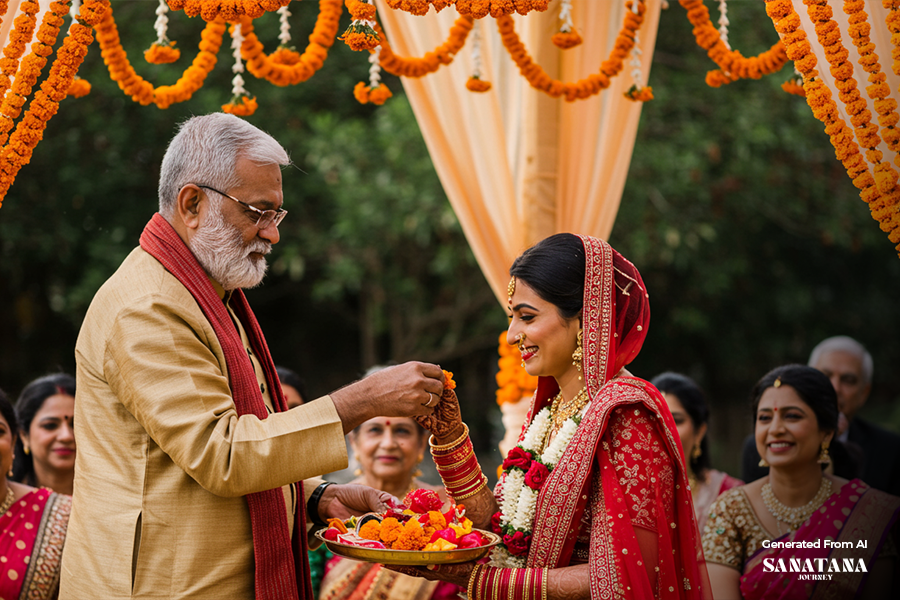
The importance of kanyadan goes beyond rituals:
- Symbol of Love & Responsibility: Parents entrust their daughter’s happiness to the groom.
Spiritual Merit: It is considered a divine act that brings blessings and good karma.
Union of Families: Kanyadaan unites two family lineages.
Blessings for a Prosperous Married Life: Ritual mantras protect the bride and groom from negativity.
Emotional Moment: It marks the transition of the daughter to her new family.
आधुनिक समय में कन्यादान
Preparation for Kanyadan Ceremony
To ensure the ritual proceeds smoothly, the following preparations are made:
Kanyadaan thali with kumkum, haldi, rice, flowers, diya, and coconut
Fresh flowers and garlands
Holy water or gangajal
Ghee or honey for the hand-off ritual
Wedding clothes for bride and groom
Puja samagri, betel leaves, and sweets
Frequently Asked Questions
What is Kanyadaan?
Kanyadaan is the Hindu marriage ritual where parents give their daughter to the groom, entrusting him with her well-being.
What is the Kanyadaan meaning in English?
Kanyadaan means “the sacred giving away of the daughter” during a Hindu wedding.
Who can perform Kanyadan?
Parents, guardians, grandparents, uncles, brothers, or anyone who raised the bride lovingly.
कन्यादान कौन कर सकता है?
जो भी कन्या का पालन-पोषण, देखभाल और सुरक्षा करता है—वही कन्यादान कर सकता है।
What happens during the Kanyadan ritual?
The bride’s hand is placed in the groom’s hand while sacred mantras are chanted and blessings are offered.
Why is Kanyadaan important (कन्यादान महादान)?
It symbolizes love, blessings, responsibility, and the joining of two families.
Is Kanyadaan mandatory in Hindu weddings?
While traditional, it is optional today and can be adapted based on family beliefs and preferences.
What is the Kanyadaan Mantra?
कन्यादान मंत्र – “नाम्ने, विष्णुरूपिणे वराय, भरण-पोषण-आच्छादन-पालनादीनां, स्वकीय उत्तरदायित्व-भारम्, अखिलं अद्य तव पत्नीत्वेन, तुभ्यं अहं सम्प्रददे।”
