
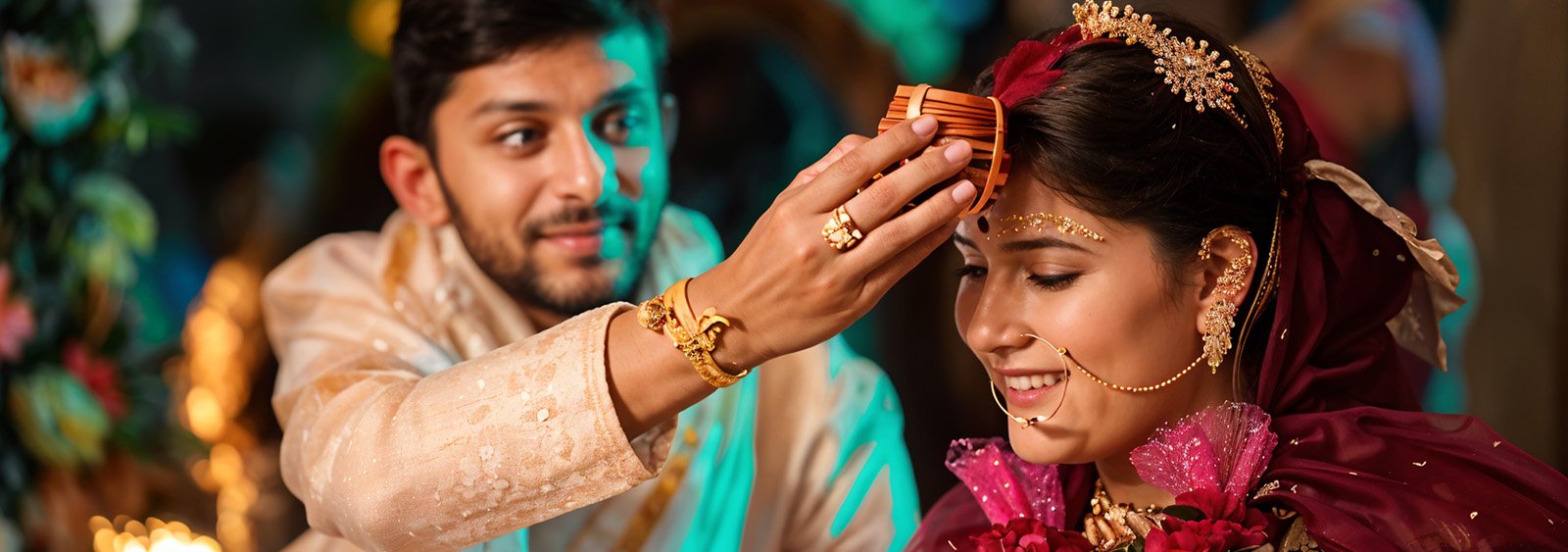
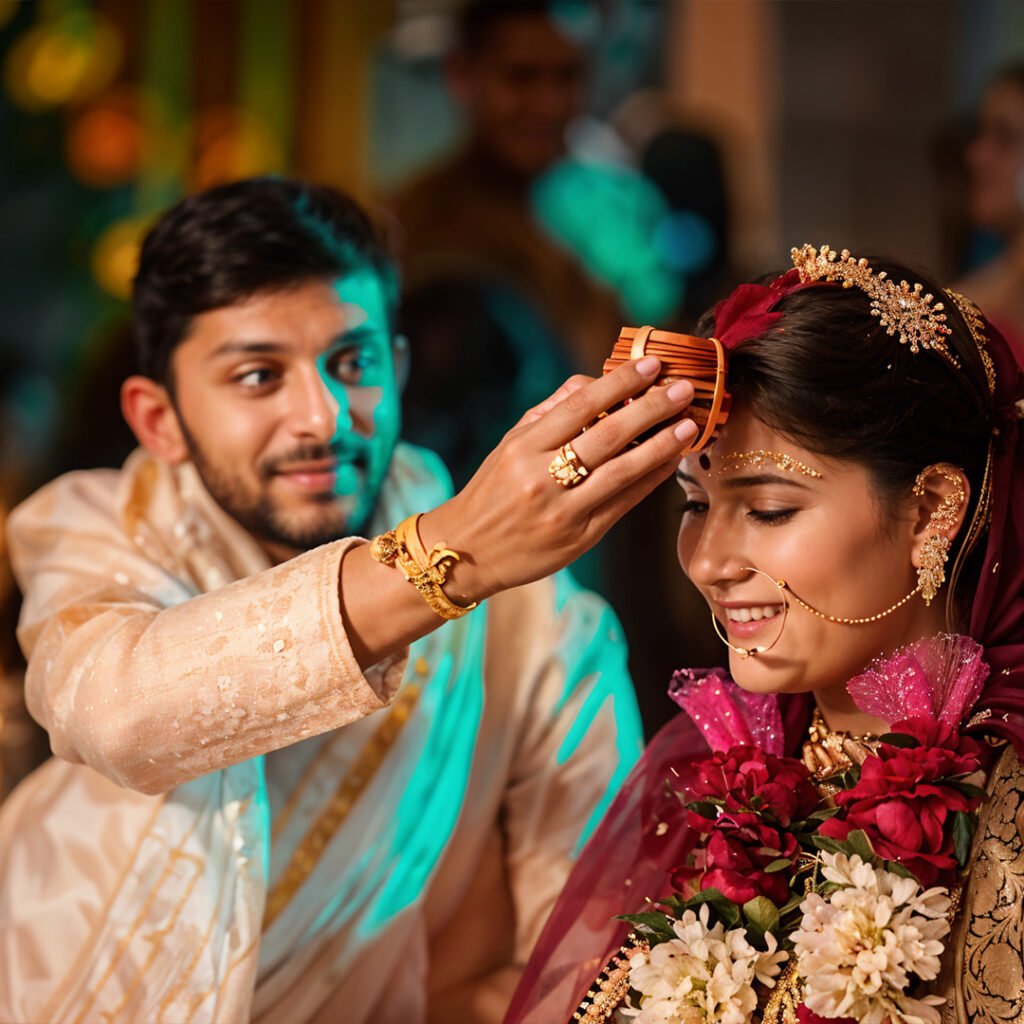
Sindoor Daan Ceremony
The Sindoor Daan Ceremony is one of the most sacred and defining rituals in a Hindu wedding. During this ritual, the groom applies sindoor (vermilion) on the bride’s hair parting, symbolizing marriage, commitment, protection, and eternal companionship. Across India, sindoor 22000 searches reflect how deeply people value this tradition—spiritually, culturally, and emotionally. From sindoor meaning to its scientific benefits, and from the history of sindoor to the different styles of wearing sindoor, this ceremony holds a special place in the journey of a married Hindu woman.
Sindoor Daan or Sindur Daan Ceremony
सिंदूरदान का परिचय
Significance of Sindoor Daan (सिंदूर दान) Ceremony
The significance of sindoor is rooted in dharma, symbolism, and science. This ceremony marks the transformation of the woman from a bride (vaivahika) to a married woman (suhaagan).
Sindoor represents Shakti (divine feminine energy).
Applying sindoor invites blessings of Maa Parvati for longevity of the husband.
Vermilion on the forehead is believed to ward off negative energies.
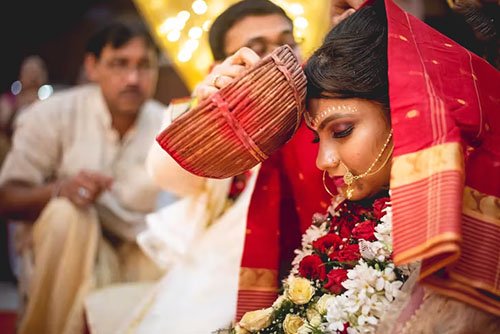
Different Styles of Applying Sindoor Daan
Women apply sindoor in various ways:
Full maang sindoor
Dot of sindoor on forehead
Just above the brows
Thin line along the hair parting
Traditional bengali sindoor style (thick and prominent)
Sindoor Daan Ceremony Process
How to Perform Hindu Sindoor Ceremony?
The Hindu Sindoor Daan ritual is performed with devotion and proper vidhi:
The bride sits facing the Agni (sacred fire).
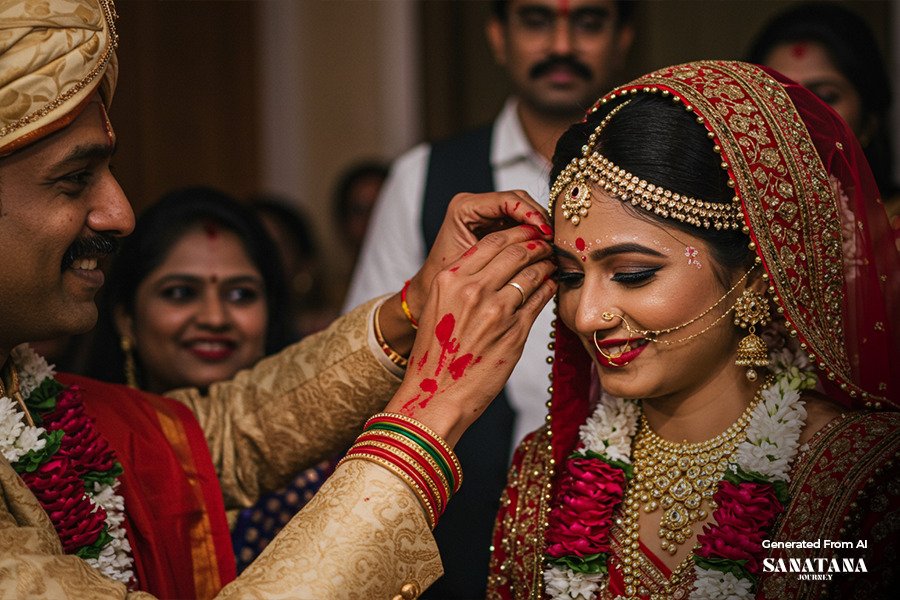
The groom takes a pinch of original sindoor powder or herbal powder sindoor.
With his right hand, he applies it along the maang from the top of the forehead.
The priest chants sacred mantras blessing the couple.
The bride touches her husband’s feet or folds her hands in gratitude.
सिंदूरदान का महत्व
Importance of Sindoor Daan
The importance of sindoor lies in:
Signifying marital status
Strengthening emotional and spiritual bond
Symbolizing blessings for long married life
Representing feminine power and dignity
Enhancing the beauty and glow of a married woman.
आधुनिक समय में सिंदूरदान
Frequently Asked Questions
What is sindoor?
Sindoor is a red/orange vermilion powder applied by married Hindu women.
What is sindoor made of?
Traditional sindoor is made from turmeric, slaked lime, and herbal minerals. Pure, herbal sindoor powder is considered safest.
What is the difference between kumkum and sindoor?
Sindoor is worn by married women in the hair parting. Kumkum (mostly made from turmeric) is placed on the forehead or deity idols and is used by all women and men.
What is the sindoor meaning in English?
Sindoor means “sacred vermilion powder symbolizing marriage.”
Why is sindoor applied?
For marital blessings, protection, prosperity, and spiritual energy activation.
Is putting a sindoor before marriage allowed?
Traditionally, husband putting sindoor before marriage is not permitted, as sindoor is a symbol of marriage itself.
Why do unmarried girls not participate in Sindoor Daan?
Cultural beliefs prohibit unmarried girls from participating because sindoor represents marital status.
