
Bhishma Ashtami 2026: Date, Significance & Tarpan Vidhi
Bhishma Ashtami – Tribute to Bhishma Pitamah
Bhishma Ashtami marks the sacred remembrance of Bhishma Pitamah, one of the foremost warriors and ethical pillars of the Mahabharata. This day is celebrated annually on Magha Shukla Ashtami, honoring his life of duty, loyalty, and unwavering devotion to dharma.
Bhishma’s legacy continues to inspire seekers of truth, righteousness, and spiritual liberation. This festival holds immense importance for devotees, especially in North India, Bengal, and traditional Hindu households.
Bhishma Ashtami 2026 – Date & Muhurat
In 2026, Bhishma Ashtami falls on Monday, 26 January 2026 during the Shukla Paksha of the Magha month, as per the Hindu calendar calendar.
Ashtami Tithi Begins: 25 Jan 2026, late night
Ashtami Tithi Ends: 26 Jan 2026, evening
Uttarayan Period: The time when Bhishma Pitamah chose to leave his mortal body is considered highly auspicious in Hindu tradition.
Significance of Bhishma Ashtami
Bhishma, also widely known as Bhishma Pitamah (and in some texts Devavrata), was one of the most respected characters in the Mahabharata. He is known for taking a lifelong vow of celibacy, incredible devotion to his father King Shantanu, and unmatched skill in wartime strategy.
Here are the unique reasons this day is celebrated:
Iccha Mrityu (Death by Will): Bhishma was blessed with the boon to choose the day of his death, which he exercised after being felled in the Kurukshetra War.
Uttarayan Departure: He waited on the bed of arrows for the auspicious Uttarayan period and left his body on Magha Shukla Ashtami, symbolizing spiritual attainment and liberation (moksha).
Ancestor Blessings: Devotees perform special tarpan and shraddha to honor ancestors and seek peace for departed souls.
Bhishma Ashtami Puja Rituals
On Bhishma Ashtami, devotees follow traditional practices that connect them to Bhishma’s virtues:
Holy Bath (Snan)
Taking a dip in a sacred river such as the Ganga or a clean water body early in the morning is believed to cleanse sins and bring auspiciousness.
Fasting (Vrat)
Many observe a strict fast from sunrise to sunset as an offering of devotion and spiritual discipline.
Tarpan & Shraddha
Offering water mixed with sesame seeds and chanting mantras for Bhishma and ancestral souls, believed to bring peace to departed ones.
Special Pujas & Chanting
Reciting holy scriptures like Vishnu Sahasranama (which Bhishma himself chanted while on an arrow bed) deepens spiritual focus and devotion.
Bhishma Ashtami Mantra
While various regional traditions have specific mantras, a commonly chanted verse in reverence of Bhishma Pitamah is:
“ॐ भीष्माय विद्महे वचनाय धीमहि तन्नो धर्मः प्रचोदयात्।”
Mahabharat Connection: Bhishma on Bed of Arrows
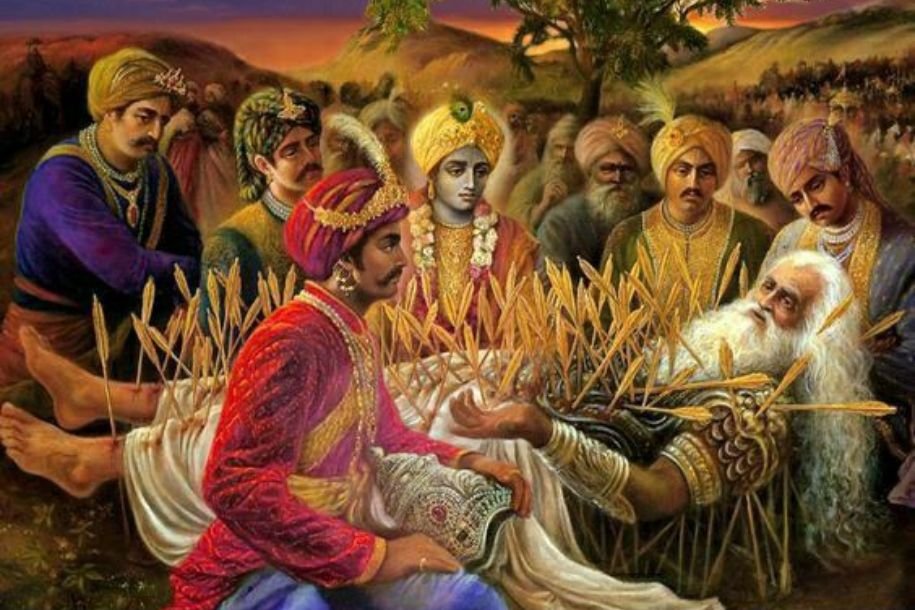
One of the most evocative images from the Mahabharata is of Bhishma lying on a bed of arrows for 58 days after being struck by Arjuna’s arrows in battle.
Despite grievous wounds, Bhishma chose not to die immediately but waited for Uttarayan, the auspicious sun’s northward movement—a symbolic act of spiritual foresight and patience.
Benefits of Bhishma Ashtami Vrat
Observing the Bhishma Ashtami Vrat is believed to help devotees:
Attain blessings for righteous living and moral strength
Seek peace and liberation (moksha) of ancestors
Gain spiritual merit through fasting and prayer
What to do on Bhishma Ashtami?
Wake early for holy bath and sankalp
Offer tarpan and shraddha water
Chant mantras with devotion
Perform charity (food, clothes, spiritual literature)
What to Avoid on Bhishma Ashtami?
Consumption of non-vegetarian food
Unnecessary material activities
Arguments or harsh speech
Donation and Seva on Bhishma Ashtami
Giving food to the needy, donating clothes, and offering spiritual books earns great merit and honors Bhishma’s spirit of selfless service. Feeding animals and assisting elders also aligns with the compassionate path Bhishma embodied.
Frequently Asked Questions
Who was Bhishma in the Mahabharata?
Bhishma was the son of King Shantanu and Ganga, known as Bhishma Pitamah, a key elder and warrior in the Mahabharata.
How did Bhishma die?
He was mortally wounded in the Kurukshetra war but chose his moment of death during Uttarayan while lying on a bed of arrows.
Who killed Bhishma?
Bhishma was fatally struck by Arjuna’s arrows, but due to his boon, he did not die immediately.
How many days was Bhishma on an arrow bed?
Bhishma lay on the bed of arrows for 58 days before he left his body.
What is Bhishma Ekadasi 2026?
These related observances honor Bhishma’s life and spiritual legacy, though not part of the main Ashtami ritual dates.