
Gudi Padwa 2026: Date, Significance, History & Celebration Guide
Gudi Padwa
Gudi Padwa 2026 marks the beginning of the Hindu New Year for Maharashtrians and Konkani communities. Celebrated on the first day of the Chaitra month, this vibrant festival symbolizes new beginnings, prosperity, and victory. Many people search for Gudi Padwa in English or detailed Gudi Padwa history to understand the deeper meaning behind this auspicious day.
The festival is closely connected with the lunar calendar and usually falls in March or April. It is also interesting to note that Gudi Padwa and Ugadi are the same in terms of marking the New Year, though they are celebrated in different regions under different names.
Gudi Padwa 2026 Date
Gudi Padwa 2026 will be celebrated on Thursday, 19 March 2026. , based on the Hindu Calendar.
This festival marks the beginning of the Marathi New Year and the start of the Hindu lunisolar calendar year, specifically Shaka Samvat 1948. It also coincides with the first day of Chaitra Navratri.
Gudi Padwa 2026 Date and Time or Muhurat
The festival is observed on the Chaitra Shukla Pratipada tithi. Based on standard calculations for India, the auspicious timings are:
Pratipada Tithi Begins: 06:52 AM on 19 March 2026.
Pratipada Tithi Ends: 04:52 AM on 20 March 2026.
Auspicious Puja Time: Approximately 06:26 AM to 12:00 PM (varies slightly by region).
Gudi Padwa Significance
The Gudi Padwa significance lies in its spiritual and cultural importance. The festival symbolizes the victory of good over evil and the start of a new agricultural and spiritual cycle. According to tradition, the Gudi represents Lord Rama’s victory over Ravana and his return to Ayodhya. Hoisting the Gudi is believed to bring prosperity and ward off negative energies. Another significance of Gudi Padwa is that it marks the beginning of the Chaitra month, which is considered very auspicious for starting new ventures, businesses, and personal goals.
Story of Gudi Padwa
The Gudi Padwa history connects the festival with mythological and historical events. One popular legend says that Lord Rama returned to Ayodhya on this day after defeating Ravana. People hoisted the Gudi as a symbol of celebration and victory. Another belief states that the great Maratha king Chhatrapati Shivaji Maharaj celebrated victories by raising a Gudi. Thus, Gudi Padwa 2026 continues the tradition of honoring courage and success.
Gudi Padwa History
The Gudi Padwa Puja history is deeply connected to ancient Hindu traditions and beliefs. It is believed that the festival marks the day when Brahma created the universe, making it the beginning of a new cosmic cycle. Because of this belief, Gudi Padwa is considered the start of the Hindu New Year in many regions, especially in Maharashtra. Another popular belief in the Gudi Padwa Puja history is linked to the victory of Rama over Ravana. After this victory, people celebrated by raising a flag of triumph, which later became the tradition of hoisting the Gudi outside homes. Over time, this ritual turned into an important part of Gudi Padwa celebrations, symbolizing victory, prosperity, and new beginnings.
Gudi Padwa: 10 Places Where Energy Rises Above Dhol Beats
During Gudi Padwa 2026, Maharashtra comes alive with grand processions and cultural performances. Some of the best places to witness Gudi Padwa celebrations include:
Mumbai
Pune
Nagpur
Nashik
Kolhapur
Thane
Aurangabad
Solapur
Satara
Ratnagiri
How to Celebrate Gudi Padwa Festival?
Celebrating Gudi Padwa 2026 involves:
Cleaning and decorating homes
Drawing rangoli at the entrance
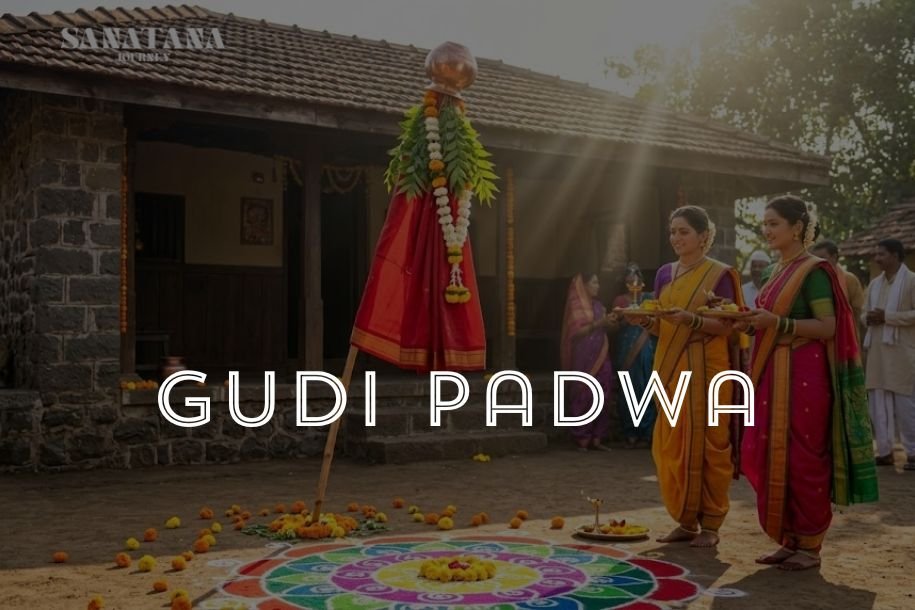
Hoisting the Gudi outside the house
Preparing traditional sweets like Puran Poli
Visiting temples for blessings
How Gudi Padwa Is Celebrated in Maharashtra?
In Maharashtra, Gudi Padwa is celebrated with great enthusiasm as it marks the Marathi New Year. On this day, people wake up early, clean their homes, and decorate entrances with rangoli and flowers. Families wear traditional clothes and prepare festive dishes like Puran Poli and Shrikhand. The most important ritual of Gudi Padwa is hoisting the Gudi, a decorated bamboo stick with a silk cloth, neem leaves, and an inverted pot, outside the house. This symbolizes victory, prosperity, and the beginning of a new year filled with happiness.
How to Make Gudi?
Making a Gudi for Gudi Padwa 2026 is simple:
Take a long bamboo stick.
Tie a bright silk cloth around it.
Add neem and mango leaves.
Place a garland of sugar crystals.
Fix an inverted silver or copper pot on top.
This Gudi is then placed outside the house as a sign of prosperity during Gudi Padwa 2026.
Gudi Padwa Festival Puja Vidhi
Gudi Padwa Festival Puja Vidhi;
Clean the house and entrance: Start the day by cleaning your home and decorating the entrance with rangoli and mango leaves.
Take a holy bath: Wake up early, take a bath, and wear clean or traditional clothes.
Prepare the Gudi: Use a bamboo stick, tie a bright cloth (saffron or yellow), neem leaves, mango leaves, flower garland, and place an inverted kalash on top.
Place Gudi: Place the Gudi outside the house, usually on the right side of the entrance or near a window.
Offer prayers: Light a diya and incense sticks, and offer turmeric, kumkum, flowers, and rice.
Offer prasad to God : Offer neem leaves mixed with jaggery, fruits, and sweets to the deity.
Perform aarti: Do the aarti and pray for happiness, prosperity, and success in the new year.
Distribute prasad: Share prasad with family members and celebrate the festival together.
Frequently Asked Questions
Why do we celebrate Gudi Padwa?
We celebrate Gudi Padwa 2026 to mark the Hindu New Year and the victory of good over evil.
Is Gudi Padwa a Maharashtrian festival?
Yes, Gudi Padwa 2026 is primarily a Maharashtrian festival, though it is linked with Ugadi 2026 in South India.
Are Gudi Padwa and Ugadi same?
Yes, Gudi Padwa and Ugadi are the same in terms of marking the New Year but differ in regional customs.