

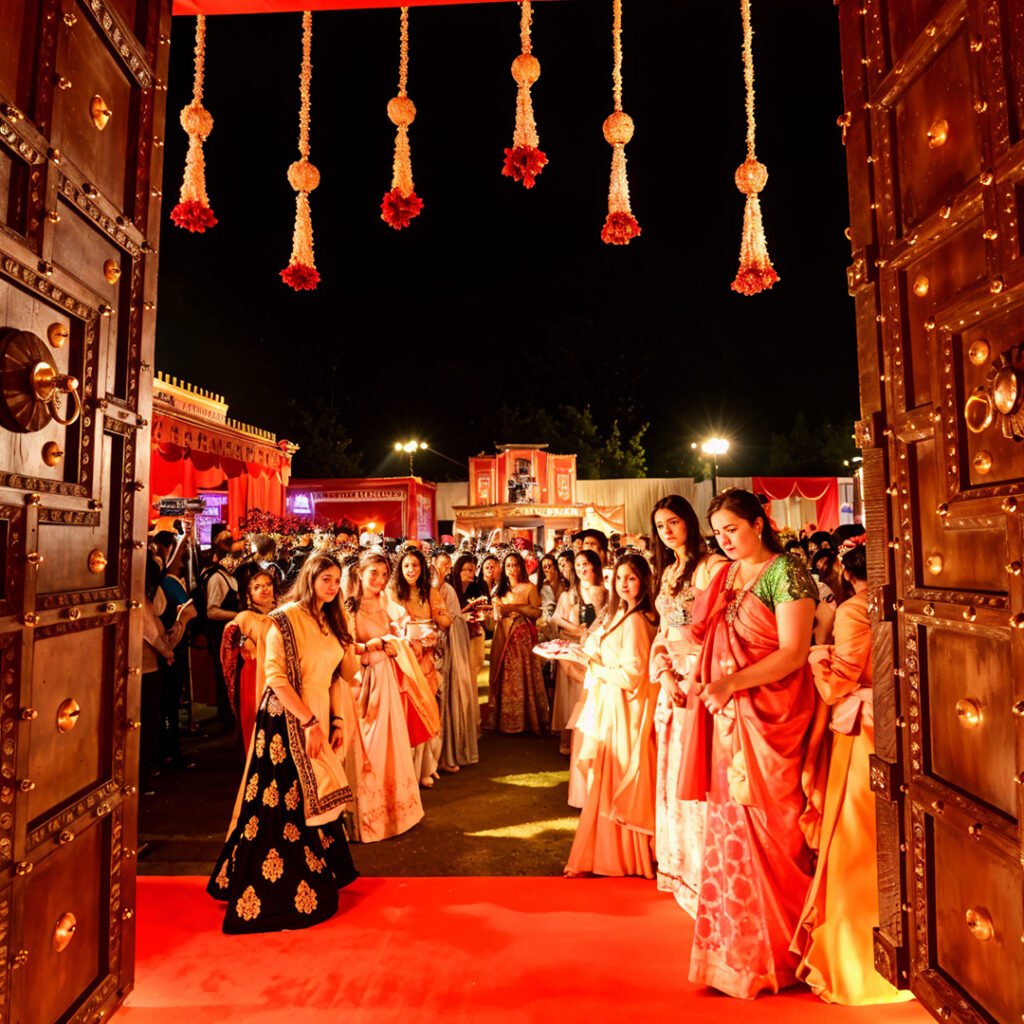
Baraati Swagat
Baraati Swagat is one of the most vibrant, energetic, and heartfelt moments in an Indian wedding. It marks the welcome of the groom and his wedding procession (Baraat) as they arrive at the bride’s venue. Filled with music, dance, colors, rituals, and joyful celebrations, the Baraat Welcome Ceremony sets the tone for the upcoming sacred wedding rituals.
In Hindu weddings, the Baraati Swagat Ceremony is more than a formality — it is a warm gesture of respect, love, and honor extended to the groom’s family. Traditional customs such as Baraat Aarti Ritual, tilak, floral showers, and garland exchange (or dupatta welcome) make this moment culturally rich and visually stunning.
Origin of Baraat in Hindu Wedding Traditions | Baraat Welcome Ceremony In Indian Weddings
वर स्वागत का परिचय
Significance of Baraati Swagat
The Baraat Welcome Rituals hold deep cultural and emotional significance:
It symbolizes respect and hospitality from the bride’s family.
The Baraati Swagat marks the union of two families with warmth and acceptance.
The Baraat Aarti protects the groom from negative energies before he enters the mandap.
Showering flowers, performing tilak, and offering sweets express love and blessings for a harmonious married life.

How to Welcome a Groom In Marriage? Baraati Swagat Kaise Karte Hain?
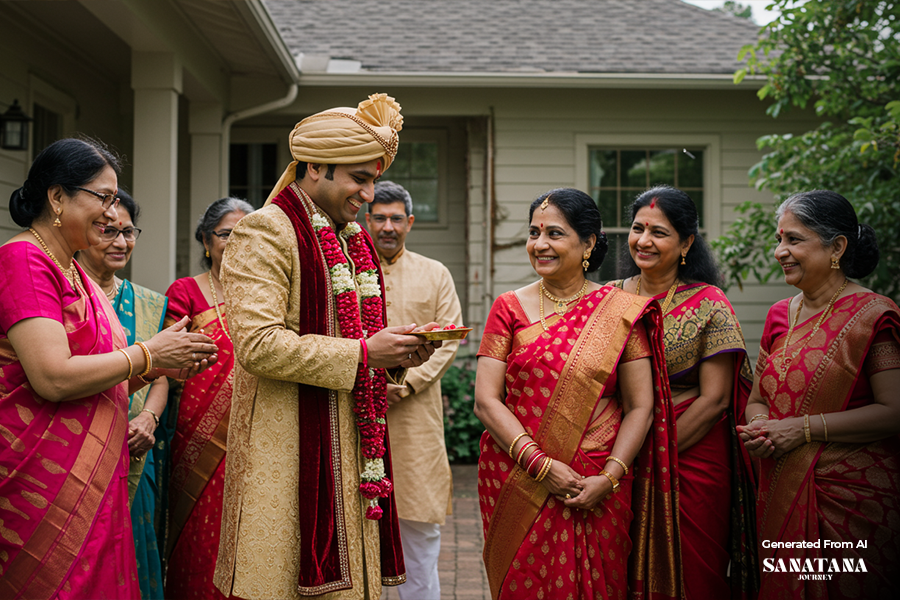
Aarti & Tilak Ceremony
The bride’s mother or a senior female relative performs Baraat Aarti Ritual, applies tilak on the groom’s forehead, and blesses him with prosperity.
Floral Shower (Pushpanjali)
Fresh rose petals or marigold flowers are showered on the groom and baraatis as a sign of joy, purity, and good luck.
Sweets & Drinks
Offering traditional sweets, thandai, coconut water, or cool drinks signifies warmth and hospitality.
Dhol & Music Processions
This is the most fun part of the Indian wedding baraati entry — the dancing, music, and celebration bring festive energy to the ceremony.
वर स्वागत का महत्व
Importance of Baraati Swagat in Indian Weddings
The Baraat welcome ceremony is significant because:
It builds the emotional connection between both families.
It protects and blesses the groom before sacred rituals.
It marks the official beginning of wedding festivities at the bride’s venue.
It showcases Indian hospitality, culture, and traditions.
Baarti Swagat Ceremony Process
Baraati Swagat Items and Traditional Baraat Swagat Ideas
Every family prepares unique ways to elevate the Baraati Welcome Ceremony. Popular items include:
- Colorful welcome dupattas & malas.
- Aarti thali with diya, rice, kumkum.
- Fresh flower petals basket.
- Rose water spray.
- Flower shower entry gates.
- Personalized badges or welcome tags.
- Traditional sweets and decorated trays.
- Baraat aarti thali decoration items.
- Musical instruments like dhols or nagadas.
Things to Remember During Baraati Swagat
Keep the aarti thali ready and properly decorated.
Coordinate colors of dupattas and malas with your wedding theme.
Use fresh flowers for the welcome ritual.
Arrange refreshments for the baraatis.
Plan a dedicated welcome team (siblings, cousins, bridesmaids).
Capture the moment — Baraati Swagat Ceremony offers some of the most iconic wedding photos!
Add personalized welcome elements for a memorable touch.
आधुनिक समय में वर स्वागत
Frequently Asked Questions
What is Baraati Swagat in Hindu weddings?
It is the traditional welcome of the groom and his procession with rituals like aarti, tilak, floral showers, and sweets.
How is the Baraat welcomed traditionally?
With aarti, tilak, flower shower, garlands or dupattas, sweet offerings, and festive music.
Who performs the Baraat Aarti Ritual?
Usually the bride’s mother or an elderly woman from the family.
What items are used in Baraati Swagat?
Aarti thali, flowers, malas or dupattas, sweets, decorated trays, and music arrangements.
What is the reception of Baarat?
The reception of Baarat is the warm welcome given to the groom and his wedding procession when they arrive at the wedding venue. The bride’s family greets them with aarti, flowers, music, and celebration, marking the start of the wedding rituals.
