

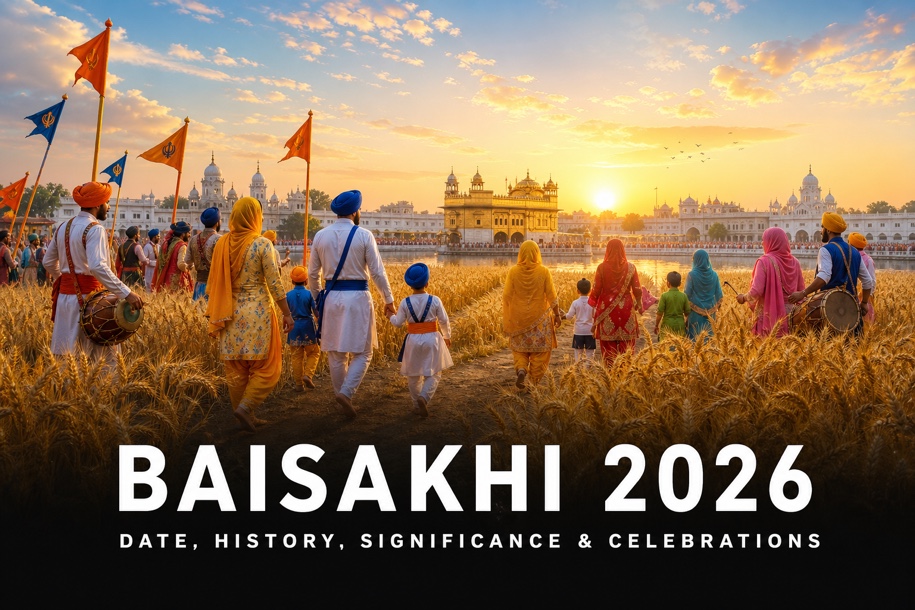
Baisakhi 2026: Date, History, Significance & Celebrations
Baisakhi or Vaisakhi
Baisakhi or Vaisakhi is one of the most vibrant and culturally rich festivals in India, primarily celebrated in Punjab and northern regions with immense enthusiasm and joy. The Vaisakhi festival marks the harvest of Rabi crops, making it a time of gratitude, prosperity, and celebration for farmers who rejoice after months of hard work in the fields. Beyond its agricultural importance, it holds deep religious significance, especially in Sikhism, as it commemorates the formation of the Khalsa Panth by Guru Gobind Singh Ji in 1699, symbolizing courage, unity, and faith.
People often wonder whether it is Baisakhi or Vaisakhi, but both terms refer to the same festival, with regional variations in pronunciation. The day is filled with lively celebrations including Gurudwara visits, Nagar Kirtans, traditional dances like Bhangra and Gidda, community feasts (Langar), and fairs, creating an atmosphere of happiness and togetherness. Overall, Baisakhi beautifully blends agriculture, spirituality, and culture, making it a festival of new beginnings, gratitude, and collective celebration.
Baisakhi or Vaisakhi 2026
Baisakhi 2026 is on 14 April 2026, and people frequently look for the exact baisakhi date or ask when it is vaisakhi to plan celebrations and gatherings. This day marks the beginning of the Sikh New Year and is also an important harvest festival for farmers.
Vaisakhi Celebration Timing for 2026
For those following specific auspicious timings (Mahurats):
Vaisakhi Sankranti Moment: 09:39 AM on April 14, 2026.
This marks the precise time the sun transitions into the Aries sign, which is the primary reason the festival is held on this date.
The date also coincides with other regional New Year festivals across India, such as Vishu in Kerala, Puthandu in Tamil Nadu, and Pohela Boishakh in West Bengal.
What is Baisakhi or Vaisakhi?
Baisakhi or Vaisakhi is a major Indian festival celebrated primarily in Punjab and northern parts of India, marking the harvest of Rabi crops and the beginning of a new agricultural cycle. It is both an agricultural and religious festival, especially significant in Sikhism as it commemorates the formation of the Khalsa Panth by Guru Gobind Singh Ji in 1699. The festival symbolizes prosperity, gratitude, and new beginnings, with people celebrating through prayers, visits to Gurudwaras, traditional dances like Bhangra and Gidda, fairs, and community feasts. Whether called Baisakhi or Vaisakhi, it represents joy, cultural unity, and spiritual devotion. The baisakhi meaning in English relates to prosperity, harvest, and cultural celebration.
What Do People Do During Baisakhi?
During baisakhi celebration, people:
Visit Gurudwaras for prayers
Participate in Nagar Kirtan processions
Enjoy traditional Punjabi food
Dance to Bhangra and Gidda
Celebrate with family and community
Story of Vaisakhi / Vaisakhi Story
The story of Baisakhi (Vaisakhi) is deeply rooted in both agriculture and religious history, especially in Sikhism. Traditionally, Baisakhi marks the harvest festival when farmers celebrate the successful harvesting of Rabi crops, expressing gratitude to nature and God for abundance and prosperity.
However, the most important historical story of Baisakhi dates back to 1699, when Guru Gobind Singh Ji established the Khalsa Panth at Anandpur Sahib. On this day, Guru Gobind Singh Ji gathered thousands of devotees and called for volunteers willing to sacrifice their lives for धर्म (faith). Five brave men stepped forward, who later became known as the Panj Pyare (Five Beloved Ones). The Guru initiated them into the Khalsa by performing the Amrit ceremony, symbolizing equality, courage, and dedication to righteousness. This marked the birth of the Khalsa, a community committed to justice, bravery, and spiritual discipline.
Since then, Baisakhi has been celebrated not only as a harvest festival but also as a day of great spiritual importance. Devotees visit Gurudwaras, participate in Nagar Kirtans, and remember the values of courage, unity, and devotion established on this historic day.
Significance of Baisakhi
The significance of Baisakhi (Vaisakhi) lies in its importance as both a harvest and religious festival. It marks the harvesting of Rabi crops, bringing joy and prosperity to farmers. Spiritually, it commemorates the formation of the Khalsa Panth by Guru Gobind Singh Ji in 1699, symbolizing courage, unity, and faith. Overall, it represents gratitude, new beginnings, and community celebration.
Information About Baisakhi
Some key information about baisakhi includes:
Celebrated mainly in Punjab and North India
Known as vaisakhi festival globally
Falls around April every year
Associated with farming and Sikh heritage
How is Vaisakhi Celebrated?
If you are wondering how is vaisakhi celebrated or how baisakhi is celebrated, here are some common practices:
Early morning prayers at Gurudwaras.
Community feasts (Langar).
Traditional dances like Bhangra.
Wearing colorful Punjabi attire.
Music, fairs, and cultural programs.
History of Baisakhi
The history of Baisakhi (Vaisakhi) is rooted in both agriculture and Sikh tradition. It was originally celebrated as a harvest festival in Punjab, marking the gathering of Rabi crops. In 1699, Guru Gobind Singh Ji gave it deeper significance by establishing the Khalsa Panth, making it an important spiritual and historical day symbolizing courage, unity, and faith.
Punjabi Vaisakhi Celebration: How it is Celebrated
In Punjab, punjabi vaisakhi celebration is grand and full of life:
Farmers celebrate a successful harvest.
Villages host fairs and competitions.
People perform energetic Bhangra and Gidda.
Traditional food and sweets are shared.
Rituals of Vaisakhi
The rituals of vaisakhi festival include:
Bathing early in the morning
Visiting Gurudwaras
Listening to Kirtan
Participating in Langar
Offering prayers for prosperity
Frequently Asked Questions
When is Baisakhi 2026?
Baisakhi 2026 will be celebrated in April. The exact baisakhi date depends on the solar calendar.
What is the Baisakhi festival?
The baisakhi festival is a harvest and religious celebration marking prosperity and Sikh New Year.
Why is Vaisakhi celebrated?
It is celebrated for harvest, prosperity, and the formation of the Khalsa Panth.
How is Baisakhi celebrated?
With prayers, dances, food, and community gatherings.
What is the significance of Baisakhi?
The significance of baisakhi lies in agriculture, culture, and spirituality.