


Kawad Yatra 2026 Start & End Date: 30 July-11 August
Welcome to Kawad Yatra: A Devotional Journey to Lord Shiva
The Kawad Yatra 2026, also known as Kanwar Yatra (कांवड़ यात्रा), is one of the most sacred pilgrimages in Hinduism, undertaken by millions of Shiva devotees (Kanwariyas) during the holy month of Shravan Maas. With saffron clothes, barefoot determination, and chants of “Har Har Mahadev,” this spiritual yatra is a vibrant expression of faith and surrender.
Kanvar or Kawad — What Does It Mean (What Is Kawad in English?)
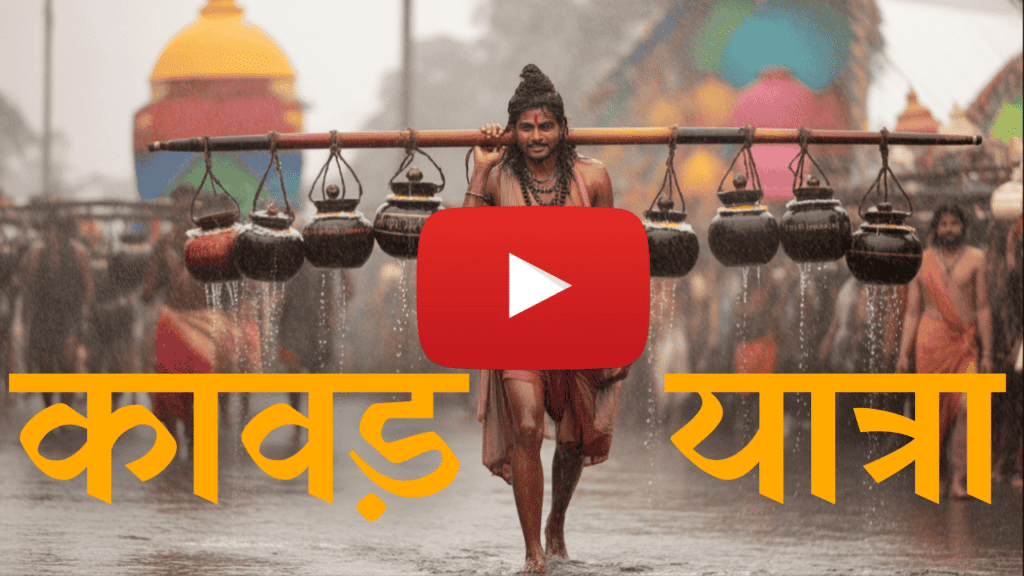
Kanwar (or Kawad / कांवड़) is a bamboo pole or stick, balanced on the shoulders with pots (generally two) at both ends. These pots are filled with holy Gangajal collected from the Ganga river. The entire setup is called a “Kawad.”
In Hindi, it’s commonly known as “कांवड़” or “कावड़”, and the devotees who carry it are called Kanwariyas.
Types of Kawad Yatra
During the Kanwar Yatra, devotees undertake different forms of the pilgrimage based on their commitment, physical strength, and devotion. Here are the main types:
Samanya Kawad (सामान्य कांवड़)
This is the most common form where devotees walk or travel at a regular pace with their kawad and offer Gangajal at local Shiva temples.
Daak Kawad Yatra (डाक कांवड़)
In this fast-paced yatra, devotees run or jog back nonstop to offer the Gangajal. It’s considered highly challenging and is often completed within 1–2 days.
Kadhi Kawad (खड़ी कांवड़)
In this strict form, devotees do not keep their Kawad on the ground at any cost—not even while resting or sleeping. It is carried in a relay or held upright at all times.
Dandi Kawad (डंडी कांवड़)
This is the most rigorous form where devotees perform a full-body prostration (sashtang dandvat) after every step, making it an intense test of devotion and physical endurance.
History of Kawad Yatra (कावड़ यात्रा का इतिहास)
The Kavad Yatra traces back to the Samudra Manthan, where Lord Shiva drank the deadly Halahala poison to save the world. To ease his pain, devotees began offering Ganga water at Shiva temples.
Carrying this water in pots tied to a bamboo pole (Kavad), devotees—known as Kanwariyas—walk barefoot to temples like Haridwar, Gangotri, and Baidyanath Dham.
What began as a personal act of devotion has now become a massive annual pilgrimage during the holy month of Shravan.
Story Behind Kawad Yatra
The history of Kawad Yatra (कांवड़ यात्रा का इतिहास) is rooted in ancient Hindu scriptures. It is believed that Lord Shiva consumed the deadly Halahala poison during Samudra Manthan to save the world. To relieve him from the poison’s effects, devotees began offering Gangajal on the Shivling. This ritual has evolved into what we now call the Kawad Yatra.
Another version says that Lord Parshuram was the first Kanwariya who offered Gangajal to Shiva. Since then, carrying water from Ganga to Shiva temples has become a tradition.
Significance of Kawad Yatra
The Kavad Yatra is a spiritual journey of devotion and self-purification, where devotees offer Ganga water to Lord Shiva as a symbol of gratitude and penance. It fosters unity, discipline, and community spirit, bringing people from diverse backgrounds together in a shared act of faith.
Kawad Yatra 2026 Start Date and Duration
The Kawad Yatra 2026 runs from 30 July to 11 August 2026 in Haridwar and across the main North Indian routes. It begins with Shravan Maas and concludes with the Sawan Shivratri jalabhishek.
- Kawad Yatra 2026 Start Date: 30 July 2026
- Masik Shivratri: 11 August 2026 (for Gangajal Abhishek)
The Kanwar yatra 2026 (कांवड़ यात्रा) usually lasts for 10–15 days, culminating in pouring Gangajal on Shivlings at their local temples or famous shrines.
The main Sawan Dak Kawad for 2026 will take place between 9 August 2026 and 11 August 2026.
Dak Kawad 2026 Date
Because a Dak Kawad is a high-speed, non-stop running relay, it always occupies the final 24 to 36 hours right before the Sawan Shivaratri jalabhishek. Since Shivaratri falls on 11 August 2026, the running teams will sprint along the highways to ensure they offer the holy water on time.
Exact Timing Breakdown
- Preparation & Departure: Running teams arrive at the holy rivers (like Haridwar or Sultanganj) by 9 August 2026 to prepare their setups.
- The Non-Stop Run: The official non-stop sprint begins on 10 August 2026.
- Jalabhishek Peak: All runners must reach their destination temples before the holy window closes on 11 August 2026.
Kawad Yatra 2026 Start and End Date (English)
| Event | Date (2026) |
| Shravan Maas Begins | July 30, 2026 |
| Kavad Yatra Begins | 30 July 2026 |
| Shravan Somvars | Weekly Mondays (4–5 total) |
| Shivratri (Shravan) | August 11, 2026 |
| Yatra Ends | 11 August 2026 |
कांवड़ यात्रा 2026 – समयरेखा (हिंदी)
कार्यक्रम From the Divine Store Observing the Sawan Somvar vrat this Kanwar season? Get the complete 16 Somvar Vrat Katha eBook — full Lord Shiva vrat vidhi, katha and udyapan steps in one instant-download PDF. Download eBook →₹99 ₹49 | तिथि (2026) |
| श्रावण मास आरंभ | 30 जुलाई 2026 |
| कांवड़ यात्रा आरंभ | लगभग 30 जुलाई 2026 |
| श्रावण सोमवार | प्रति सोमवार (कुल 4–5 बार) |
| श्रावण शिवरात्रि | 11 अगस्त 2026 |
| यात्रा समाप्त | 11 अगस्त 2026 |
Kawad Yatra 2026 Samagri – What You’ll Need
If you are planning to join the Kawad Yatra 2026, here’s a list of essential samagri (items) every Kanwariya must carry:
- Bamboo Kawad (कांवड़)
- Water pots or plastic cans (for Gangajal)
- Orange or saffron clothing
- Pair of durable slippers or barefoot gear
- First-aid kit & toiletries
- Dry fruits/snacks
- Raincoat or umbrella (as Shravan is monsoon season)
Rules of Kawad Yatra 2026
The Kanwar yatra is not just a journey, it’s a spiritual discipline. Follow these key rules –
- Do not place the Kawad on the ground. Always rest it on a stand or hook.
- Maintain celibacy and purity during the yatra.
- Refrain from intoxicants or non-vegetarian food.
- Be respectful of fellow devotees and locals.
- Chant “Har Har Mahadev” regularly.
Facts About Kawad Yatra
Here are the facts about the Kanwar Yatra –
- It is one of the largest religious foot pilgrimages in the world, with millions of devotees participating each year.
- Devotees, known as Kanwariyas, wear saffron attire and chant Shiva’s names throughout their journey.
- Many participants follow strict spiritual discipline, including fasting and celibacy during the Yatra.
- Most Kanwariyas cover the distance on foot, choosing a path of endurance and devotion.
- Temporary camps and service stations are set up to offer food, rest, and first aid to the pilgrims.
- The pilgrimage concludes with offering the collected Ganga water to a Shiva Lingam through ritual bathing.
Why is Gangajal so Important in Kawad Yatra 2026?
Gangajal (Ganga water) holds immense spiritual significance in Kawad yatra 2026. It is considered the purest element in Hinduism. Offering Gangajal to Lord Shiva during Shravan Maas helps cleanse sins, fulfil wishes, and bring peace. That’s why the Kawad Yatra centers around fetching Gangajal from sacred locations like Haridwar, Gaumukh, or Gangotri.
Why Should Kawad Not Touch the Ground?
Kanwar (कांवड़) is a holy item and is treated with great respect. It is believed that placing it on the ground makes it impure and insults Lord Shiva. That’s why you’ll see Kanwariyas resting their Kawad on special stands or hooks, never directly on the earth.
“Har Har Mahadev!” – Why the Chant?
“Har Har Mahadev” is not just a chant—it’s a war cry of devotion. During the Kawad Yatra, this chant echoes in the streets, energizing the crowd and invoking Shiva’s blessings. It symbolizes the victory of good over evil and awakens spiritual fervor.
Why does the Kawad Yatra happen in Shravan Maas?
The Kanwar Yatra is held only in Shravan Maas (July-August) because this month is dedicated to Lord Shiva. According to legends, this is the time when Shiva saved the world by drinking poison. Devotees observe fasts, perform abhishek with Gangajal, and chant mantras to express gratitude and devotion
Where Does the Kawad Yatra Go?
The yatra begins from cities like Delhi, UP, Rajasthan, Bihar, and Haryana. Devotees walk to Haridwar, Gaumukh, or Gangotri to collect Gangajal and then return to pour it on Shivlings in:
- Gangotri Temple
- Gaumukh
- Haridwar
Each route is marked with resting camps, food stalls, and medical aid for the pilgrims.
Importance of Rudrabhishek During Sawan Somwar Vrat 2026
During the holy month of Shravan, performing Rudrabhishek on Sawan Somwar Vrat is considered highly auspicious. Devotees offer Gangajal, milk, honey, and bilva leaves to the Shivling while chanting mantras, especially the Maha Mrityunjaya Mantra. This sacred ritual brings peace, prosperity, and divine blessings from Lord Shiva.
Shiv Chalisa – Devotion to Lord Shiva
Strengthen your spiritual connection with Mahadev through the sacred Shiv Chalisa.
Shiv Aarti– Evening Prayer to Please Bholenath
Read the complete Shiv Aarti and seek the blessings of Bholenath.
Kawad Songs & Vibes
Modern Kanwar Yatra is also filled with devotional bhajans and energetic Kawad songs played by DJ Kawads. Popular songs like “Bhole Ka Bhakt,” “DJ Pe Bhole Ka Naam,” and “Bam Bam Bhole” are often heard echoing across highways and camps, enhancing the festive spirit.
Kanwar Yatra Meaning & History
Frequently Asked Questions
When Will Kawad Yatra Start in 2026?
Where does Kanwar Yatra start and end?
It starts from cities in North India (like Delhi, UP, Bihar) and ends at Shiva temples where Gangajal is offered—often in Baidyanath Dham, Kashi Vishwanath, or Neelkanth Mahadev.
Which month is Kawad yatra in?
It takes place in Shravan Maas (July–August).
Which is the No 1 Kawad Yatra in India?
The Haridwar Kawad Yatra is the biggest and most popular.
Can girls do Kawad Yatra?
Yes, girls can and do participate in the Kawad Yatra.
What are the rules of Kawad?
Kawad Yatra 2026 pilgrims should keep the Kawad off the ground, maintain purity and discipline, avoid intoxicants and non-vegetarian food, respect fellow pilgrims, and offer Gangajal according to local temple guidance.
Can I ride a vehicle in Kawad?
Many avoid motor vehicles for spiritual reasons, but some use vehicles to cover longer distances.
Is Kanwad Yatra During February Month Also?
Yes, a smaller but deeply significant Kanwad Yatra also takes place during the month of February (or early March). Known as the Phalguna Kanwar Yatra (or Shardiya Kanwar Yatra), this pilgrimage occurs during the Hindu lunar month of Phalguna and culminates on the grand festival of Maha Shivratri. Devotees head to holy sites like Haridwar or Brijghat to fetch sacred Ganga water to anoint Shiva Lingams on Maha Shivratri night. While the monsoon-season Shravan Yatra (July–August) remains the largest mass gathering, the February winter yatra is actively observed by thousands of dedicated pilgrims across states like Uttar Pradesh and Uttarakhand.


Pingback: “9 Inspiring Truths About Kavad Yatra That Will Move Every Devotee’s Heart” - Minorstudy
ॐ नमः शिवायः
बहुत सटीक एवं ज्ञान वर्धक उल्लेख ।
ॐ नमः शिवायः
🔱 हर हर महादेव 🙏🌼