
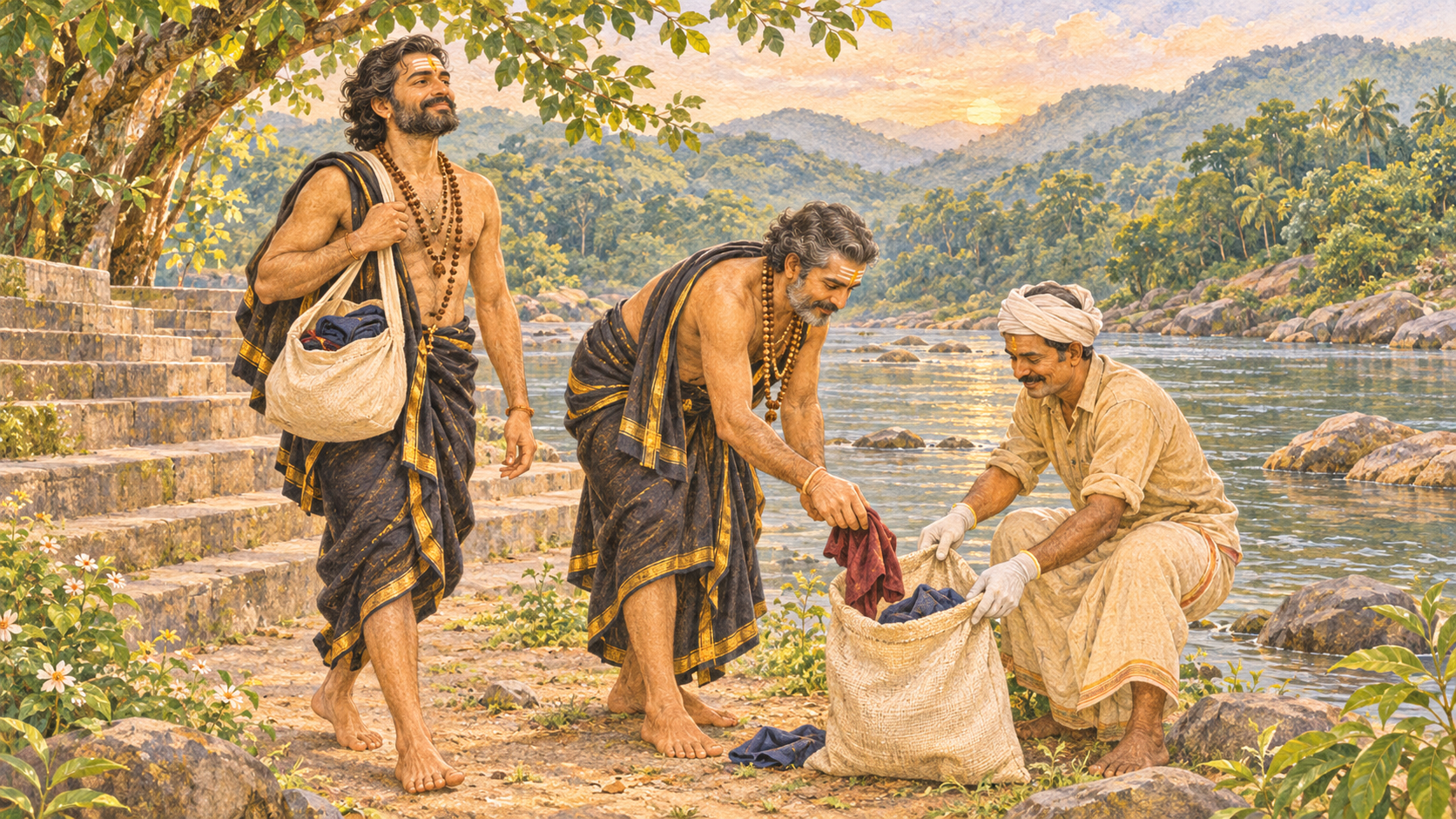
At Sabarimala, the Pamba River is where many Ayyappa devotees pause before the climb to Sannidhanam. In the opening days of the 2026 Mandala season, an old problem has returned to the riverbanks: clothes left behind after ritual bathing. On 19 November, Kerala’s Legislative Assembly environment committee recommended giving pilgrims clearer guidance about keeping clothes out of the river. The following morning, The New Indian Express reported sanitation workers removing discarded garments at Pampa Thriveni and Manappuram. Kerala government updates · Field report
For Sanatana Journey, this opening-week story raises a question about the yatra itself. What does it mean to leave a sacred place ready for the devotee who comes after us? At Pamba, an answer can be as simple as taking your wet clothes with you.
Why Pamba matters to Ayyappa devotees
In the tradition described on Kerala’s official Sabarimala portal, King Rajasekhara of Pandalam found the infant Ayyappa at Pampa, another spelling of Pamba. That story helps explain why the river is more than a landmark on the way to the shrine. For many pilgrims, a dip there marks a transition from the travel of ordinary life to the ascent toward darshan. The river carries memory as well as water. Sabarimala ritual traditions
Leaving bathing clothes in the river creates work downstream and on the banks. The official guidance asks pilgrims to keep Pamba, Sannidhanam and the trekking paths clean. The portal’s green-pilgrimage instructions specifically discourage discarding clothes in the river. Read the signs at your bathing point and follow current directions from staff. Official green-pilgrimage guidance · Pilgrim do’s and don’ts
How the vratam carries into the journey
The official ritual guide describes the traditional 41-day Mandala vratam as a period of austerity for devotees of Lord Ayyappa. Its disciplines begin well before a pilgrim reaches the temple. Families may be familiar with the wearing of a mala and the guidance of a guruswami. A question worth carrying into the yatra is how those weeks of restraint shape our choices when circumstances become crowded, tiring or inconvenient.
In Bhagavad Gita 17.14, Krishna includes shaucha, cleanliness or purity, among the disciplines of the body. The verse speaks about bodily discipline in a broader spiritual teaching. Applying that teaching to care for a shared pilgrimage place is our devotional reading. Keeping the bathing area clean can give physical expression to the reverence with which we approach it. Bhagavad Gita 17.14, IIT Kanpur Gita Supersite
Make room for the next pilgrim
Before leaving home, decide how you will carry wet clothes after bathing. A washable cloth bag can keep them separate until you can dry them. Bring what you actually need, keep hold of wrappers until the designated collection point and ask staff where to put anything you cannot take away. At queues and prasadam counters, follow directions for the flow of pilgrims so that people behind you can move safely. These are small decisions, easier to remember when the group agrees on them before starting.
Sanitation workers are doing a demanding share of this care. Kerala’s official updates describe a dedicated team working across the pilgrimage sites. A travelling group can help by listening to their instructions and leaving a clear space for their work. If you want to volunteer, ask locally about organised service and stay clear of river or trekking hazards. Kerala government sanitation update
One practice to bring home
A pilgrim may remember the ascent, the chant or the first glimpse of the shrine for years. It is worth remembering the ordinary acts around those moments too: the person who made room in the queue, the worker who picked up a garment and the family who carried theirs away. The same care belongs at a local temple, on a riverbank and after a community meal. It is a form of seva available on any day, including to those who observe the season from home.
Preparing for Mandala season?
Read our Ayyappa vratam guide for a fuller look at the devotional practices that families follow during the season.
Frequently asked questions
Can I leave bathing clothes in Pamba?
Take your clothes away with you. The official pilgrimage guidance discourages leaving them in the river.
Is cleanliness part of the Ayyappa pilgrimage?
The official instructions ask devotees to keep Pamba, Sannidhanam and the trekking routes clean. In devotional life, caring for a place shared by other pilgrims can be an act of seva.
Where should I check current pilgrim instructions?
Consult the official Kerala Sabarimala portal before travelling and follow signs and staff instructions at the site.