
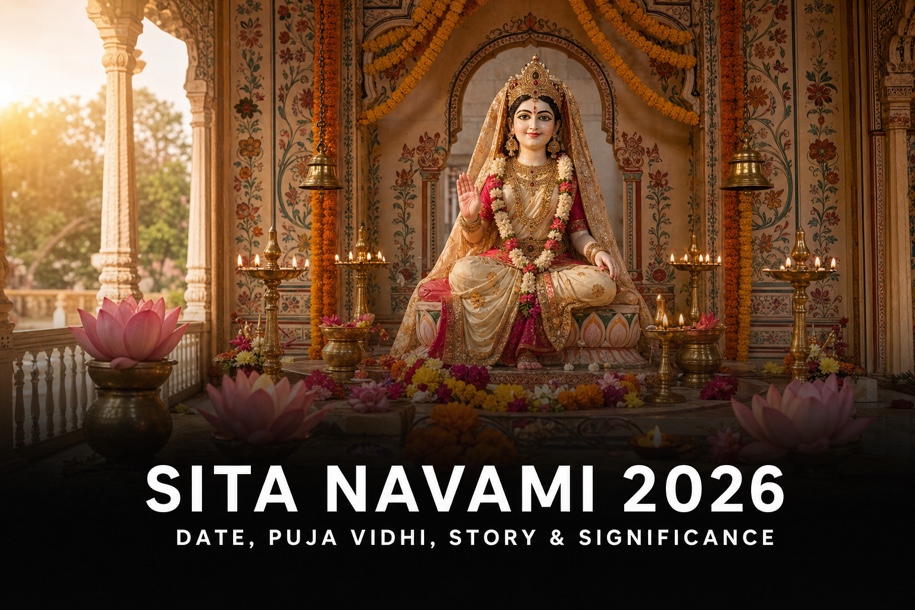
Sita Navami 2026: Date, Puja Vidhi, Story & Significance
Sita Navami
Sita Navami is a sacred Hindu festival that marks the birth of Goddess Sita, the divine consort of Lord Rama. Celebrated with devotion across India, this day holds immense spiritual significance, especially for married women who observe fasts for marital bliss and family well-being.
Sita Navami 2026
In 2026, Sita Navami will be celebrated with great devotion and श्रद्धा (faith). Devotees visit temples, observe vrat (fast), and perform special pujas dedicated to Goddess Sita. This festival is also known as Sita Jayanti 2026, marking the divine appearance of Maa Sita on Earth.
Sita Navami 2026 Date, Tithi and Muhurat
Sita Navami 2026 Date: 25th April 2026 (Saturday)
Navami Tithi Begins: 01:14 AM on April 25, 2026
Navami Tithi Ends: 12:49 AM on April 26, 2026
Who is Goddess Sita?
Goddess Sita is considered the embodiment of purity, devotion, sacrifice, and strength. She is an incarnation of Goddess Lakshmi and is revered as the ideal wife and woman in Hindu tradition. She is widely known from the epic Ramayana, where her life exemplifies dignity, patience, and unwavering faith.
Birth Story of Goddess Sita
The birth story of Sita Mata is unique and divine. According to scriptures, King Janaka of Mithila found a baby girl while ploughing the field. She emerged from the Earth, which is why she is also called Bhoomi Putri (daughter of Earth). Thus, the sita mata birth place is believed to be Mithila (present-day Janakpur in Nepal). This miraculous birth makes sita birth date and sita birthday highly auspicious for devotees.
Significance of Sita Navami
Sita Navami holds deep spiritual importance:
It celebrates the birth of the ideal woman and देवी स्वरूपा
Married women observe vrat for a happy and long married life
It promotes values like patience, purity, and devotion
Worshipping Goddess Sita brings peace, prosperity, and harmony
This day is especially important for those seeking blessings for marital stability and family happiness.
Sita Navami Vrat Vidhi
Devotees observe fast with dedication and follow these steps:
Wake up early and take a holy bath
Take a sankalp (vow) to observe the vrat
Keep Nirjala Vrat or consume fruits (Phalahar)
Avoid onion, garlic, and non-vegetarian food
Spend the day in prayer and devotion
Women mainly keep this vrat for the well-being of their husbands and family.
Sita Navami Puja Vidhi
Clean the house thoroughly, especially the puja area, and create a peaceful and sacred environment
Wake up early during Brahma Muhurta, take a bath, and wear clean traditional clothes (preferably yellow, red, or light colors)
Set up a chowki and place idols or pictures of Goddess Sita and Lord Rama on a clean cloth
Take a sankalp (vow) by holding water in your hand and pray for marital happiness, family well-being, and peace
Establish a kalash filled with water, place mango leaves and coconut on top, and apply roli and chawal
Invoke (aavahan) Goddess Sita and Lord Rama with devotion and folded hands
Perform abhishek of the idols using water, milk, honey, curd, and holy water (if available)
Decorate (shringar) the idols with clothes, flowers, roli, chawal, and sandalwood paste
Offer bhog such as fruits, kheer, halwa, and panchamrit along with lighting a diya and incense sticks
Read or listen to Sita Navami Vrat Katha and recite verses from Ramayana
Perform aarti of Goddess Sita and Lord Rama with devotion and ring a bell
Do parikrama (circumambulation) of the puja place 3 or 7 times and offer final prayers
Observe fast throughout the day (Nirjala or Phalahar) and avoid onion, garlic, and non-vegetarian food
Break the fast in the evening after completing the puja and consume only sattvik food
Distribute prasad among family members and offer food or donations to the needy for blessings
Difference Between Sita Navami and Ram Navami
While both festivals are deeply connected and celebrated with great devotion, Sita Navami and Ram Navami mark the birth of two divine personalities with different spiritual meanings. Ram Navami celebrates the birth of Lord Rama, who symbolizes dharma (righteousness), truth, and ideal leadership, and it is observed in the month of Chaitra. On the other hand, Sita Navami celebrates the birth of Goddess Sita, who represents purity, devotion, sacrifice, and the ideal woman, and it is observed in the month of Vaishakh. While Ram Navami is widely celebrated by all devotees, Sita Navami is especially significant for married women who observe fasts for marital happiness and family well-being. Together, both festivals highlight the divine union of Lord Rama and Goddess Sita and their teachings for a balanced and righteous life.
The Ultimate Saubhagya Collection: Authentic 16 Shringar for Sita Navami
Frequently Asked Questions
What is Savitri Vrat?
Savitri Vrat is a fast observed by married Hindu women for the long life and well-being of their husbands, inspired by the story of Savitri and Satyavan.
Why is Vat Savitri celebrated?
It is celebrated to honor Savitri’s devotion to her husband, symbolizing love, loyalty, and strength. Women worship the banyan (Vat) tree for their husband’s longevity.
What do we call Vat Purnima?
Vat Purnima is another name for Vat Savitri, celebrated on the full moon (Purnima) day, mostly in Maharashtra and South India.
How to do Vat Purnima puja?
Women worship the banyan tree, tie sacred threads around it, offer prayers, and recite the Savitri-Satyavan story for their husband’s long life
What is the difference between Vat Savitri and Vat Purnima?
Vat Savitri is observed on Amavasya (no moon) mainly in North India, while Vat Purnima is on Purnima (full moon) in Maharashtra and South India. The ritual and story are the same.