
Chaitra Navratri 2026: Dates, 9 Colors & Significance | Complete Guide
What is Chaitra Navratri?
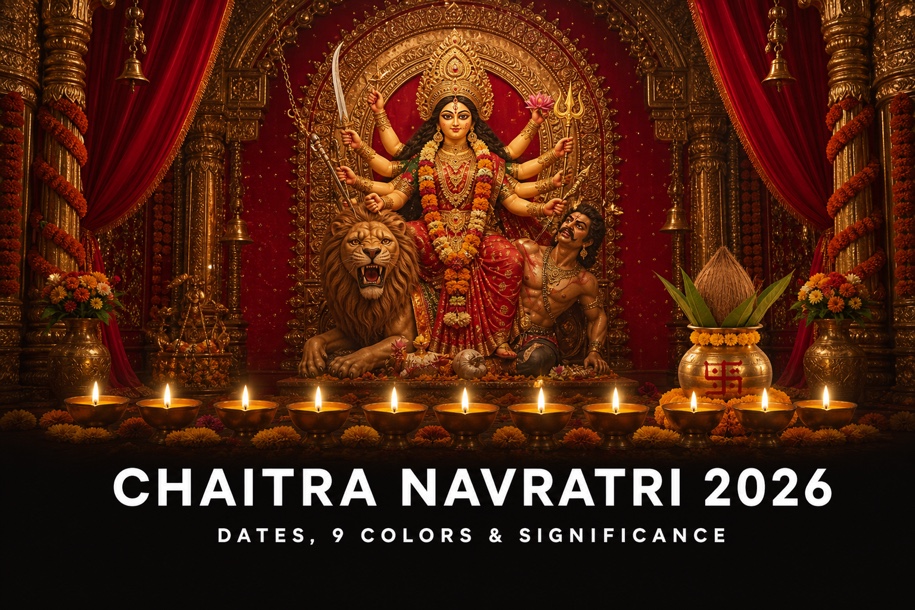
Chaitra Navratri is a nine-day Hindu festival dedicated to Goddess Durga, marking the beginning of the Hindu New Year. Celebrated in the month of Chaitra (March-April), this festival is observed with devotion across India, with special pujas, fasting, and rituals. It is believed that during these nine days, Goddess Durga descends on Earth to bless her devotees.
Chaitra Navratri 2026 Date & Time / Navratri 2026 March
In 2026, Chaitra Navratri will begin on March 19, 2026, and conclude on March 27, 2026. Below are the key timing for the festival:
द्रिक पंचांग के अनुसार, चैत्र माह के शुक्ल पक्ष की प्रतिपदा तिथि 19 मार्च 2026, गुरुवार को सुबह 6 बजकर 52 मिनट पर शुरू होगी
Chaitra Navratri 2026 Dates India / Navratri 2026 Dates
Each day of Navratri is dedicated to a different form of Goddess Durga and has specific prayers and rituals associated with it:
19 March 2026: Ghatasthapana, Chandra Darshan, and Shailputri Puja
20 March 2026 : Brahmacharini Puja
21 March 2026 : Chandraghanta Puja
22 March 2026 : Kushmanda Puja
23 March 2026 : Skandamata Puja
24 March 2026 : Katyayani Puja
25 March 2026: Kalaratri Puja
26 March 2026 : Mahagauri Puja and Kanya Pujan
27 March 2026 : Siddhidatri Puja and Ram Navami
Significance of Chaitra Navratri
Chaitra Navratri significance marks the victory of good over evil, symbolized by Goddess Durga’s battle against Mahishasura. The festival is considered auspicious for spiritual growth, self-discipline, and devotion. It also coincides with the birth of Lord Rama, making it an important celebration for Hindus. Many devotees observe fasts, perform pujas, and chant mantras to seek divine blessings, prosperity, and well-being.
Chaitra Navratri 2026 Colours and Their Significance
The Chaitra Navratri 2026 colours and significance are as follows:
Day 1: Red – Maa Shailputri
The first day of Navratri is dedicated to Maa Shailputri, the daughter of the Himalayas. The color red represents power, passion, and strength, reflecting her divine energy. Wearing red on this day is believed to attract positivity and courage.
Day 2: White – Maa Brahmacharini
On the second day, Maa Brahmacharini is worshipped, symbolizing wisdom, peace, and devotion. The color white represents purity and serenity, helping devotees seek inner calmness and spiritual growth.
Day 3: Royal Blue – Maa Chandraghanta
The third day is dedicated to Maa Chandraghanta, who blesses her devotees with bravery and grace. The color royal blue signifies stability, confidence, and divine energy, offering protection from negativity.
Day 4: Yellow – Maa Kushmanda
On the fourth day, Maa Kushmanda, the goddess of creation, is worshipped. The color yellow represents happiness, brightness, and prosperity, encouraging warmth and positive vibrations.
Day 5: Green – Maa Skandamata
The fifth day honors Maa Skandamata, the mother of Lord Kartikeya. The color green symbolizes nature, renewal, and harmony, bringing peace and balance into one’s life.
Day 6: Grey – Maa Katyayani
On the sixth day, devotees worship Maa Katyayani, a fierce warrior form of Durga. The color grey represents destruction of evil and transformation, signifying strength and determination.
Day 7: Orange – Maa Kalaratri
The seventh day is dedicated to Maa Kalaratri, the fiercest form of Durga, who destroys demons. The color orange symbolizes energy, enthusiasm, and fearlessness, filling devotees with motivation and courage.
Day 8: Peacock Green – Maa Mahagauri
On the eighth day, Maa Mahagauri is worshipped for her purity and serenity. The color peacock green represents beauty, grace, and peace, helping devotees attain spiritual enlightenment.
Day 9: Purple – Maa Siddhidatri
The ninth and final day is dedicated to Maa Siddhidatri, the goddess of wisdom and divine knowledge. The color purple signifies ambition, devotion, and spiritual power, guiding devotees toward enlightenment.
Rituals and Traditions of Chaitra Navratri
Chaitra Navratri is observed with various rituals and traditions that differ across regions. Some common practices include:
Ghatasthapana: A sacred Kalash is installed in homes or temples to invoke the Goddess.
Fasting: Devotees observe a nine-day fast, consuming fruits, milk, and satvik food.
Daily Puja & Aarti: Special prayers and aartis are conducted to honor Goddess Durga.
Kanya Pujan: On Ashtami or Navami, young girls are worshipped as manifestations of the Goddess.
Bhajan & Kirtan: Devotional songs and dances are performed to celebrate the Goddess’s power.
Chaitra Navratri in States of India
Chaitra Navratri is celebrated with different traditions across India:
North India (Uttar Pradesh, Delhi, Punjab, Haryana): People observe fasts, visit temples, and perform Kanya Pujan on the eighth or ninth day.
Maharashtra: Gudi Padwa, the Marathi New Year, coincides with the first day of Chaitra Navratri.
West Bengal: Known as Basanti Durga Puja, the festival is celebrated with Durga idol worship and community gatherings.
Gujarat: People perform Garba and Dandiya Raas as part of the Navratri celebrations.
South India (Andhra Pradesh, Karnataka, Tamil Nadu): The festival is marked by Rama Navami celebrations and temple rituals.
Frequently Asked Questions
Where Is Navratri 2026 Celebrated?
Navratri 2026 is celebrated across India, but major celebrations occur in states like Uttar Pradesh (Ayodhya, Varanasi), Gujarat (Ahmedabad, Vadodara), West Bengal (Kolkata), Maharashtra (Mumbai, Pune), and Karnataka (Mysuru).
What Are the 4 Types of Navratri in 2026?
There are four types of Navratri celebrated in a year:
Chaitra Navratri (March-April) – Marks the beginning of the Hindu New Year.
Sharad Navratri (September-October) – The most widely celebrated Navratri, leading to Dussehra.
Magha Navratri (January-February) – Dedicated to Goddess Durga’s worship.
Ashadha Navratri (June-July) – Observed by select devotees and saints.
What Are the 9 Days of the Navratri Calendar?
Navratri 2026 Colours and date are –
Day 1 – 19 March 2026 (Thursday) – Yellow – Worship of Shailputri
Day 2 – 20 March 2026 (Friday) – Green – Worship of Brahmacharini
Day 3 – 21 March 2026 (Saturday) – Grey – Worship of Chandraghanta
Day 4 – 22 March 2026 (Sunday) – Orange – Worship of Kushmanda
Day 5 – 23 March 2026 (Monday) – White – Worship of Skandamata
Day 6 – 24 March 2026 (Tuesday) – Red – Worship of Katyayani
Day 7 – 25 March 2026 (Wednesday) – Royal Blue – Worship of Kalaratri
Day 8 – 26 March 2026 (Thursday) – Pink – Worship of Mahagauri
Day 9 – 27 March 2026 (Friday) – Purple – Worship of Siddhidatri